

TVS Apache RTR 160 4V vs Bajaj: Detailed Comparison


TVS Apache RTR 160 4V vs Bajaj: Here's how they compares
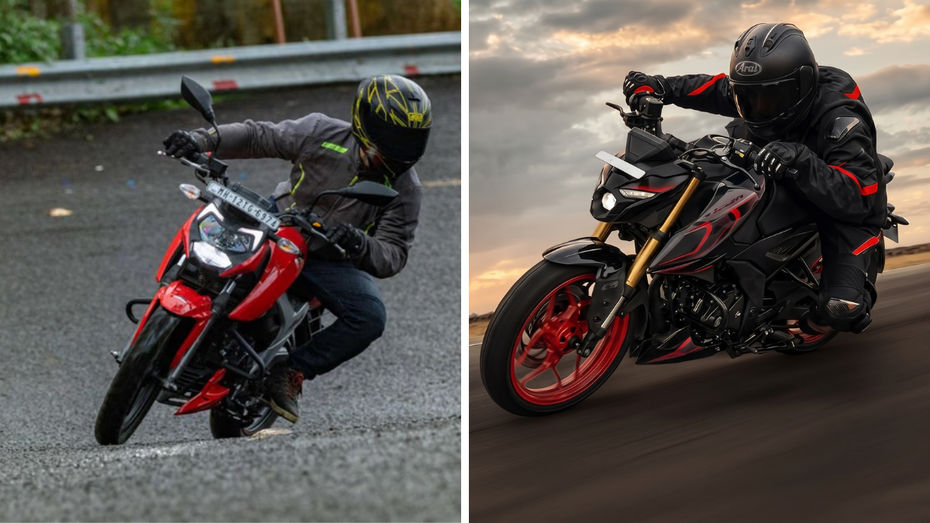
The TVS Apache RTR 160 4V and the Bajaj Pulsar N160 are arguably two of India’s most feature-dense sports bikes in the entry-level performance segment. Beyond their distinctively bold streetfighter designs, both motorcycles compete head-on in price, performance, features, and more. If you’re looking for something more premium, stylish and powerful than your regular commuter, without compromising on everyday comfort, these two make more sense than anything else in this price bracket. However, choosing between them can be a tall order, and that’s where this detailed comparison will help you make an informed buying decision.
Price and Variants
|
TVS Apache RTR 160 4V |
Price (ex-showroom, Delhi) |
Bajaj Pulsar N160 |
Price (ex-showroom, Delhi) |
|
RM Disc (Black Edition) |
Rs 1,19,890 |
SD USD Single Seat |
Rs 1,22,106 |
|
Single Channel ABS |
Rs 1,26,890 |
TD USD Single Seat |
Rs 1,25,104 |
|
Dual Channel ABS with USD |
Rs 1,32,740 |
TD USD Split Seat |
Rs 1,31,771 |
|
— |
-- |
S USD Single Seat |
Rs 1,33,511 |
|
USD with TFT |
Rs 1,39,440 |
SS USD Split Seat |
Rs 1,42,585 |
-
Both motorcycles are available in plenty of trim options, giving buyers the flexibility to choose the features they want based on their budget.
-
The TVS Apache RTR 160 4V has a marginally more affordable entry point, but for that nominal price difference, the Bajaj Pulsar N160 gives front USD forks as standard.
-
The mid-spec variants of the two are priced closely, while the upgrade to the higher-spec N160 costs relatively less.
-
The N160 costs slightly more at the top end as well, but it offers extra features and more power than the RTR 160 4V.
-
Both motorcycles come with a standard 5-year warranty, although TVS limits the coverage to 60,000km, while Bajaj offers a higher limit of 75,000km.
Dimensions and Design
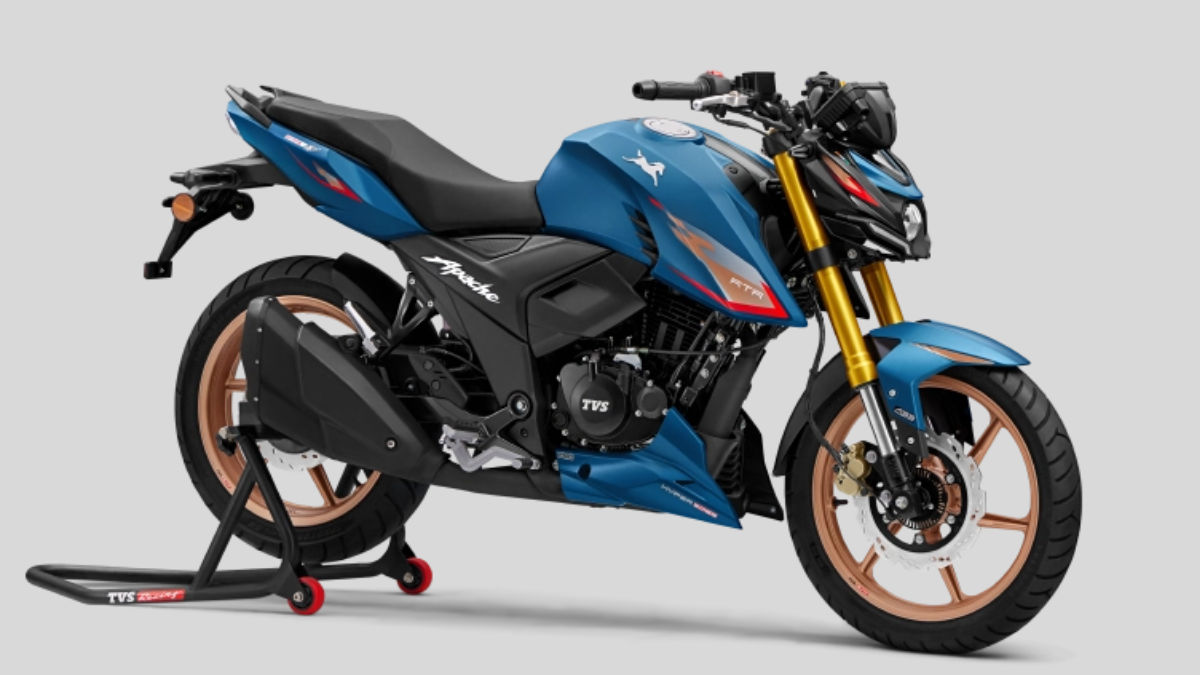
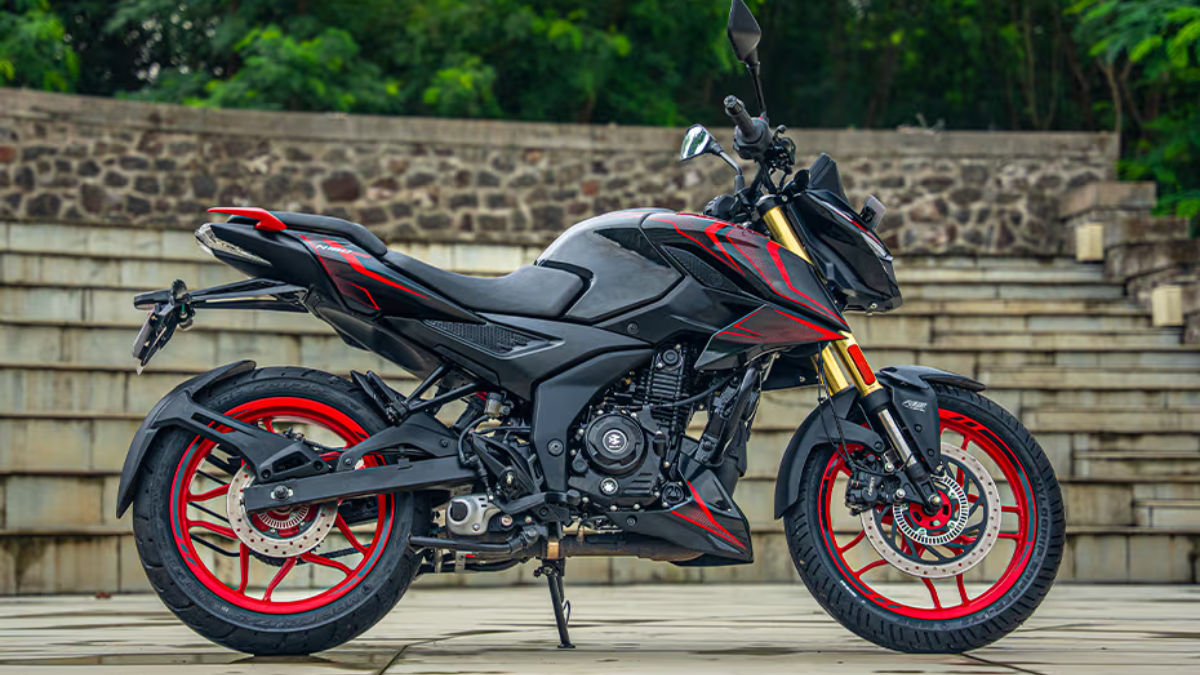
|
Specification |
TVS Apache RTR 160 4V |
Bajaj Pulsar N160 |
Difference |
|
Wheelbase |
1,357mm |
1,348mm |
+9mm |
|
Ground Clearance |
180mm |
165mm |
+15mm |
|
Saddle/Seat Height |
800mm |
795mm |
+5mm |
|
Kerb Weight |
143kg (SC) / 146kg (DC USD & TFT) |
152kg |
-6kg to -9kg |
|
Fuel Tank |
12 litres |
14 litres |
-2 litres |
-
Both motorcycles appear broadly identical in size.
-
The TVS Apache RTR 160 4V has a marginally longer wheelbase than the Bajaj Pulsar N160, but it hardly makes any difference in the behaviour of their chassis.
-
The RTR 160 4V, however, has an edge over broken roads with 15mm of extra ground clearance.
-
The Apache is also a bit lighter, making it feel slightly more agile in traffic, while the N160’s extra heft gives it a little more stability at higher speeds.
-
Both are equally accessible in terms of seat height, but the Pulsar’s larger fuel capacity gives it a longer riding range on a single tank.
-
Despite coming from different brands, both motorcycles are quite similar in terms of design. Both feature aggressive streetfighter styling, with sculpted bodywork and low-slung LED projector headlamps. The RTR 160 4V, however, has a slightly more athletic, race-inspired stance, while the N160 looks a bit bulkier and more muscular.
-
Also, the Apache has seamlessly flowing body panels and a fat, Bullpup exhaust muffler, while the Pulsar gets layered bodywork and an underbelly exhaust.
Ride and Handling
|
Specification |
TVS Apache RTR 160 4V |
Bajaj Pulsar N160 (2V / 4V variants) |
|
Frame |
Double Cradle Split SynchroStiff Frame |
Tubular Steel Frame |
|
Front Suspension |
Telescopic (SC) / 37mm USD (DC USD & TFT) |
33mm USD (SD & TD variants) / 37mm USD (S & SS variants) |
|
Rear Suspension |
Showa Floating-piston Monoshock |
Nitrox Monoshock |
|
Front Tyre |
90/90-17, Tubeless |
100/80-17, Tubeless |
|
Rear Tyre |
130/70 R17, Tubeless Radial |
130/70-17, Tubeless (SD, TD & S) / 130/70 R17 Tubeless Radial (SS only) |
|
Front Brake |
270mm dia Petal Disc |
280mm Disc (Single Seat trims) / 300mm Disc (Split Seat trims) |
|
Rear Brake |
130mm Drum (RM Disc only) / 240mm dia Petal Disc (all other variants) |
130mm Drum (SD only) / 230mm Disc (all other variants) |
|
ABS |
1-Channel (RM & SC) / 2-Channel (DC USD & TFT) |
1-Channel (SD, TD Single & S) / 2-Channel (TD Split & SS) |
-
Both bikes are built around different types of tubular steel frames. The TVS’ chassis, however, feels slightly more rigid and playful than the Bajaj’s, thanks to the learnings from TVS Racing’s programmes.
-
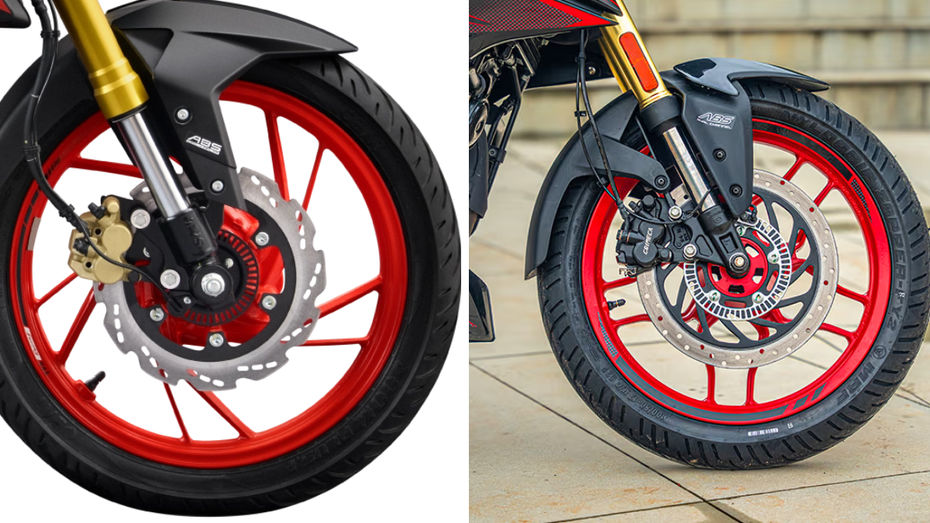
The higher variants of both bikes get similar suspension setups, featuring 37mm front USD forks and a monoshock at the rear. The entry-level Apache RTR 160 4V, however, gets conventional telescopic forks, while the lower trims of the Pulsar N160 get 33mm USD forks up front.
-
The N160 also gets a slightly wider front tyre, which should offer a little more grip at the front. TVS, meanwhile, gives a radial tyre at the rear as standard on the Apache, while the Pulsar gets a radial tyre only on the top-spec trim.
-
Braking setups on the two are more or less similar too. Both get a rear drum brake on their base variants, while the higher variants offer similarly sized front and rear disc brakes, along with single- or dual-channel ABS depending on the trim. Bajaj, however, equips the S and SS variants of the new Pulsar N160 with a much larger front disc, which should offer sharper braking performance.
-
Both motorcycles are similarly equipped, with each offering a few extra premium features in different areas. However, they are both tuned for a balance between sporty handling and everyday comfort.
Features and Technology
|
Specification |
TVS Apache RTR 160 4V |
Bajaj Pulsar N160 (2V / 4V variants) |
|
Headlamp |
Class-D LED Projector |
Bi-functional Sealed LED Projector |
|
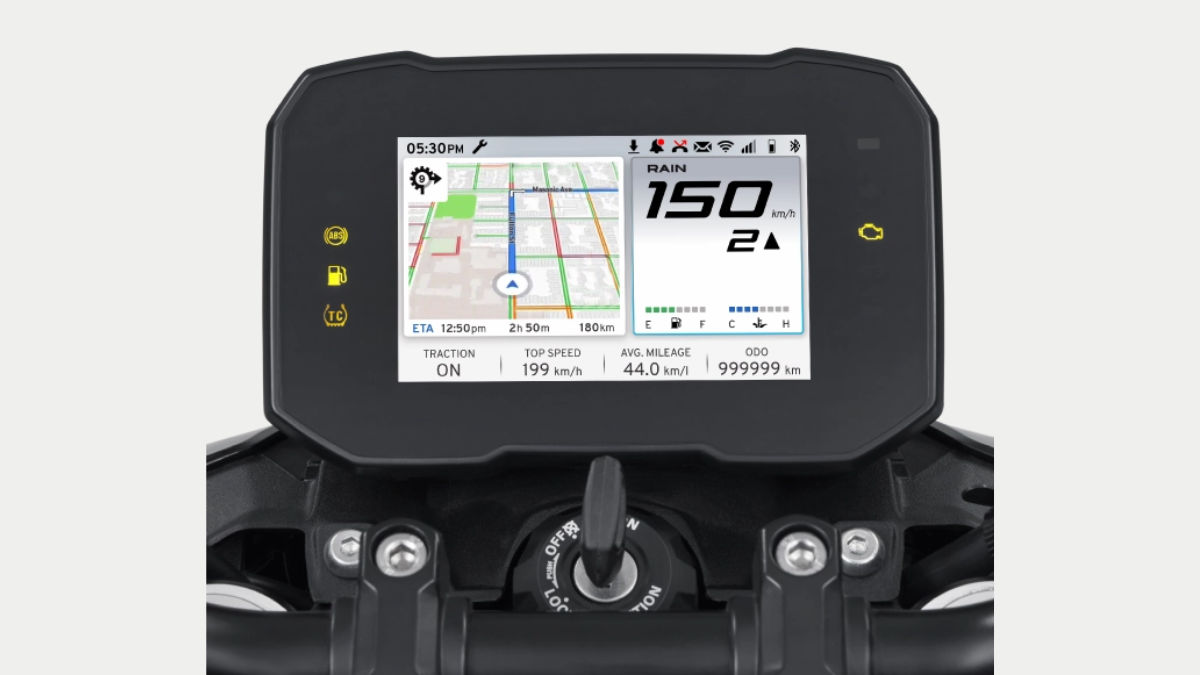
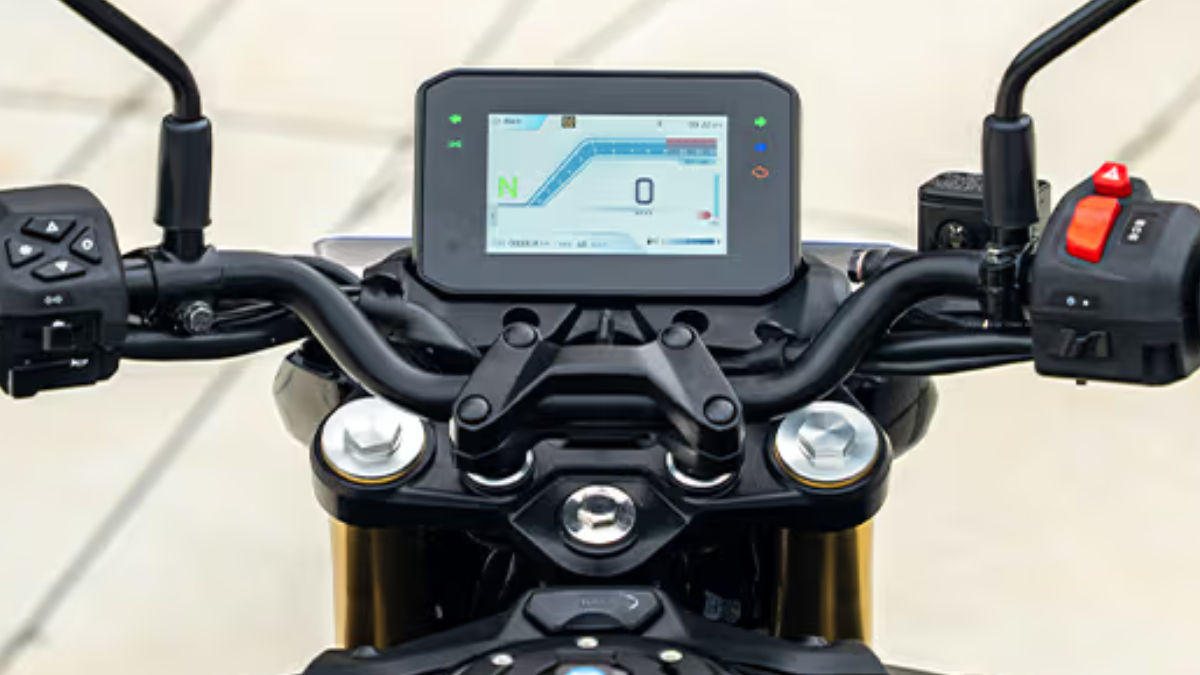
Instrument Cluster |
Digital LCD (SC & DC USD) / 5-inch TFT (Top variant) |
Reverse Monochrome LCD (SD & TD) / 5-inch Colour LCD (S) / 5-inch TFT (SS) |
|
Smartphone Connect. |
Bluetooth |
Bluetooth / Bluetooth+Wifi (Top Variant) |
|
Connected Features |
Turn-by-turn Navigation, call & SMS alerts, voice assist (Race Telemetry on TFT variant) |
Turn-by-turn Navigation, call & SMS alerts, music control (Google Map Mirroring, Lap Timer, & Digital Document Storage on TFT Variant) |
|
Riding Modes |
Three - Sport, Urban, Rain |
Four – Road, Rain, Sport, Off-Road |
|
Ride-by-Wire |
— |
Intelligent Throttle – S & SS variants only |
|
Traction Control |
Top variant only |
TD Split & SS variants |
|
Crawl Tech |
Glide Through Technology (GTT) - Standard |
S & SS variants only |
|
Adjustable Levers |
DC USD & TFT variants |
SS variant only |
|
Rear Lift-off Protection |
Dual Channel ABS variants |
Available on all except base SD variant |
|
Clutch |
Assist & Slipper Clutch - Standard |
Assist & Slipper Clutch - Standard |
|
USB Charging |
— |
USB Type-C |
-
Again, the two offer every premium feature you can expect in this segment, but at varying trim levels.
-
Both motorcycles get a fully digital LCD instrument cluster as standard and a 5-inch colour TFT screen on their top-spec trims. The Bajaj Pulsar N160, however, offers a colour LCD dash on the second-from-top variant.
-
Both get Bluetooth connectivity as standard, along with a few additional connected features on their top-spec variants. The Pulsar N160 SS, however, also offers Wi-Fi connectivity and more practical features such as full-screen Google Maps navigation and document storage.
-
The TVS Apache RTR 160 4V offers traction control only on the top-spec variant, while the N160 offers it in two variants and also features ride-by-wire tech in the higher trims.
-
The RTR gets three riding modes, while the Pulsar offers four. However, the riding modes on the Apache also alter the power and torque output, whereas those on the N160 only change the output behaviour. Riding modes on both bikes also adjust the ABS intervention according to the selected riding conditions.
-
TVS offers its Glide Through Tech as standard on the RTR 160 4V, while the Pulsar N160 gets the Crawl Tech only on S and SS trims. Both make riding in traffic effortless by minimising the need for throttle inputs.
-
The RTR gets adjustable levers on two higher variants, while the N160 gets them only on its top trim. Both get a slipper clutch as standard, though.
-
Rear-wheel lift-off protection is an important safety feature during hard or panic braking, helping keep the rear wheel planted. The Apache offers it on its dual-channel ABS variants, while the Pulsar gets it on all variants except the base.
Engine and Performance
|
Specification |
TVS Apache RTR 160 4V |
Bajaj Pulsar N160 |
|
Engine Type |
Single-cylinder, 4-stroke, SOHC, 4-valve |
Single-cylinder, SOHC, 2-valve (SD & TD) / 4-valve (S & SS) |
|
Engine Cooling |
Oil-cooled |
Air-cooled (SD & TD) / Oil-cooled (S & SS) |
|
Displacement |
159.7cc |
164.82cc (2V) / 164.9cc (4V) |
|
Max Power |
Sport: 17.55PS at 9,250rpm / Urban-Rain: 15.64PS at 8,650rpm |
16PS at 8,750rpm (2V) / 18.5PS at 9,500rpm (4V) |
|
Max Torque |
Sport: 14.73Nm at 7,500rpm / Urban-Rain: 14.14Nm at 7,250rpm |
14.65Nm at 6,000rpm (2V) / 14.4Nm at 8,000rpm (4V) |
|
Transmission |
5-Speed Constant Mesh Gearbox |
5-Speed Constant Mesh Gearbox |
|
Clutch |
Multiplate, Wet-type, Assist & Slipper Function |
Multiplate, Wet-type, Assist & Slipper Function |
|
Max Speed |
Sport: 114km/h / Urban-Rain: 103km/h |
120kmph (2V variant) |
|
0-60 km/h Sprint Time |
4.8 Seconds |
4.5 seconds (S & SS, claimed fastest in segment) |
-
The TVS Apache RTR 160 4V comes with a single 4-valve, rev-happy engine option delivering its peak power and torque in two selectable stages.
-
Bajaj, meanwhile, gives two engine options for the new Pulsar N160. Its 2-valve air-cooled engine delivers slightly less power (about 1.5PS down) and similar peak torque as the RTR 160 4V. However, it delivers that peak torque at lower RPM, making it feel more tractable and effortless in everyday commuting.
-
If you want a free-revving feel, Bajaj also offers a 4-valve, oil-cooled engine option. It delivers about a horsepower more than the Apache and offers faster acceleration as well as top speed.
-
Both motorcycles get five-speed gearboxes and slipper clutches that make gear shifts more effortless while also preventing rear-wheel hop during aggressive downshifts.
Verdict
This is probably the toughest battle yet, as both feature aggressive styling and are packed with features and performance, and even price quite similarly at every step of the ladder. The TVS Apache RTR 160 4V, however, offers more consistent performance across its range, while the Bajaj Pulsar N160 maintains greater consistency in terms of styling.
If you want sharper styling and a slightly more playful chassis with decent performance at a marginally lower price, the RTR 160 4V is the safer bet. Otherwise, the Pulsar N160 makes a strong case at the upper end of its price range, offering class-leading performance and plenty of features for the money.
Comparisons With Other Rivals
The Hero Xtreme 160R 4V brings sharp styling and strong performance with its Combat Edition, while the TVS Apache RTR 160 4V offers a more complete package at the top end.
If you prioritise bolder, more muscular styling over outright performance and features, the Bajaj Pulsar NS160 could be a good pick.
The Honda SP160 makes a stronger case if you want a more practical daily commuter, but it lacks the sporty feel that the Apache offers.
While it falls short on outright performance against the RTR 160 4V, the Yamaha FZ-S Fi Hybrid leans more towards comfort, efficiency and refinement.
User Reviews
- Thankyou Bajaj Family N 160इंजन: 164.82cc, 2-valve FI पावर: 16 PS @ 8,750 rpm टॉर्क: 14.65 Nm गियरबॉक्स: 5-speed फ्यूल टैंक: 14 लीटर सीट हाइट: 795 mm वजन: लगभग 152 kg (variant के अनुसार) ब्रेक: 300 mm front + 230 mm rear disc; कुछ variants में Dual-Channel ABS USD fork: चुनिंदा variants में LED projector headlamp और USB charging भी मिलते हैं।Read More
- jitni tareef utni kam hi haiBahot hi acha stylish bike hai. Kuch hi time me TVS number 1 pe ayega. Jitni tareef karu utni kam hi lagega. Mere dost ne buy ki thi jab, tab maine ride ki, main shock ho gaya, look bhi bahot badiya tha. Mera dil bik gaya yeh use karke, main pehle pulsar bike use kar raha tha, isko chalane ke bad main pulsar becha aur tvs khareeda.Read More