

- English
- हिंदी
Suzuki Access 125 vs TVS Jupiter 125: Detailed Comparison


Both are two of the best 125cc scooters in India, but which one should you buy? We analyse
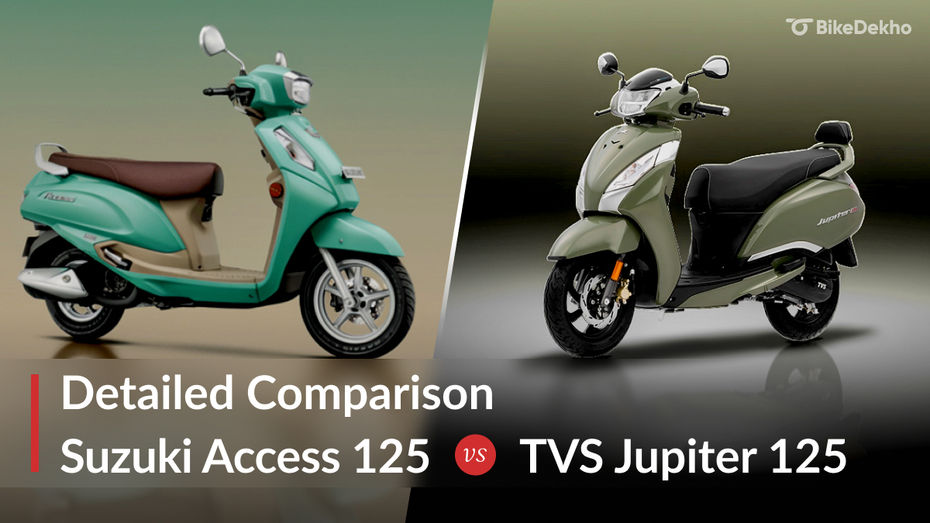
The Indian 125cc family scooter segment is a tough one to crack. Buyers here don’t want just a commuter; they want a scooter that starts without drama in any weather, comfortably accommodates a small family, swallows a week’s worth of groceries without complaint, and still looks decent parked outside a wedding hall. The Suzuki Access 125 and TVS Jupiter 125 are built to strike that balance, while also bringing a few useful bells and whistles to the table. That’s why choosing between the two can be daunting. If you’re also torn between them, this detailed comparison will help you pick the one that best suits your needs.
Price and Variants
|
Suzuki Access 125 |
Price (ex-showroom, Delhi) |
TVS Jupiter 125 |
Price (ex-showroom, Delhi) |
|
Standard Edition Drum Brake (Std) |
Rs 82,185 |
Drum Alloy |
Rs 81,700 |
|
Special Edition Disc Brake (SE) |
Rs 87,827 |
Disc |
Rs 86,110 |
|
Ride Connect Edition Disc Brake + Alloy Wheels (RC) |
Rs 90,727 |
DT SXC |
Rs 88,950 |
|
Ride Connect TFT Edition (RCT) |
Rs 93,877 |
SmartXonnect |
Rs 89,935 |
|
Ride Connect ABS Edition (RC ABS) |
Rs 96,230 |
— |
— |
|
Ride Connect TFT ABS Edition (RCT ABS) |
Rs 1,01,279 |
— |
— |
-
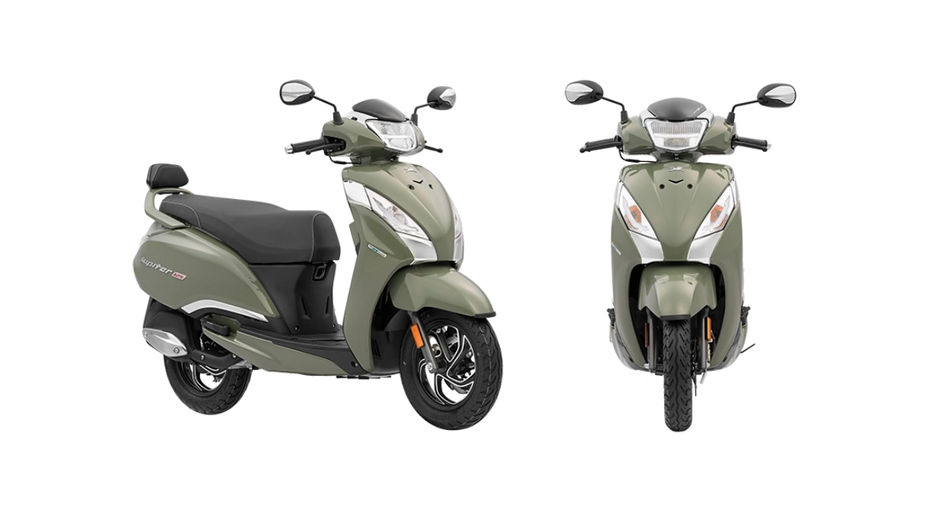
The TVS Jupiter 125 starts at a slightly more affordable entry point despite offering machine-cut alloy wheels as standard.
-
The Suzuki Access 125 commands a marginal premium over the corresponding Jupiter 125 variants, but it gets a full-LCD instrument cluster as standard.
-
Both scooters offer variants with broadly comparable feature combinations, but the Access 125 also gets two additional variants with a single-channel ABS option.
-
TVS offers a more impressive 5 years/50,000km standard warranty on the Jupiter 125, compared to Suzuki’s 2 years/24,000km cover on the Access.
-
The Access 125, however, claws back some points with Suzuki’s extended coverage of up to 10 years/76,000km, offered as an optional extra.
Dimensions and Design
|
Specification |
Suzuki Access 125 |
TVS Jupiter 125 |
Difference |
|
Length |
1,835mm |
1,852mm |
-17mm |
|
Width |
680mm (Std) / 690mm (SE/RC) |
691mm |
-11mm/-1mm |
|
Height |
1,155mm |
1,168mm |
-13mm |
|
Wheelbase |
1,260mm |
1,275mm |
-15mm |
|
Ground Clearance |
160mm |
163mm |
-3mm |
|
Seat Length |
856mm |
790mm |
+66mm |
|
Seat Height |
— |
765mm |
— |
|
Kerb Weight |
107kg (Std) / 106kg (SE/RC) |
109kg / 108kg |
-2kg |
|
Fuel Tank |
5.3 litres |
5.1 litres |
+0.2-litre |
|
Colour Options |
6 |
11 |
-5 |
-
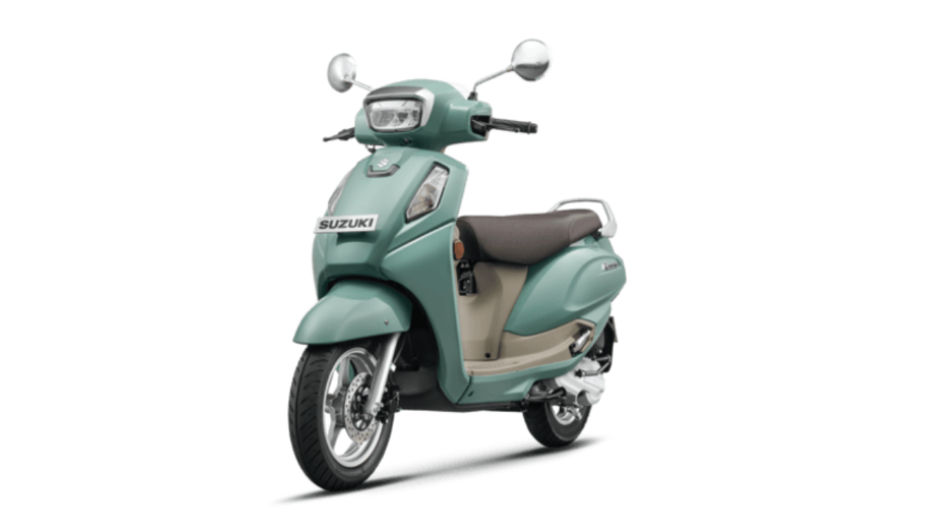
Both scooters look almost identical in size and offer nearly similar ground clearance.
-
The Suzuki Access 125 has a slightly shorter wheelbase, making it a bit more agile when changing direction, while the TVS Jupiter 125’s longer wheelbase lends it greater straight-line stability.
-
The Access is a bit lighter, while the TVS Jupiter 125 has marginally lower seat height. Both, however, feel equally accessible to Indian riders.
-
The Access, however, has an edge in terms of seating space, thanks to its longer seat than the Jupiter 125.
-
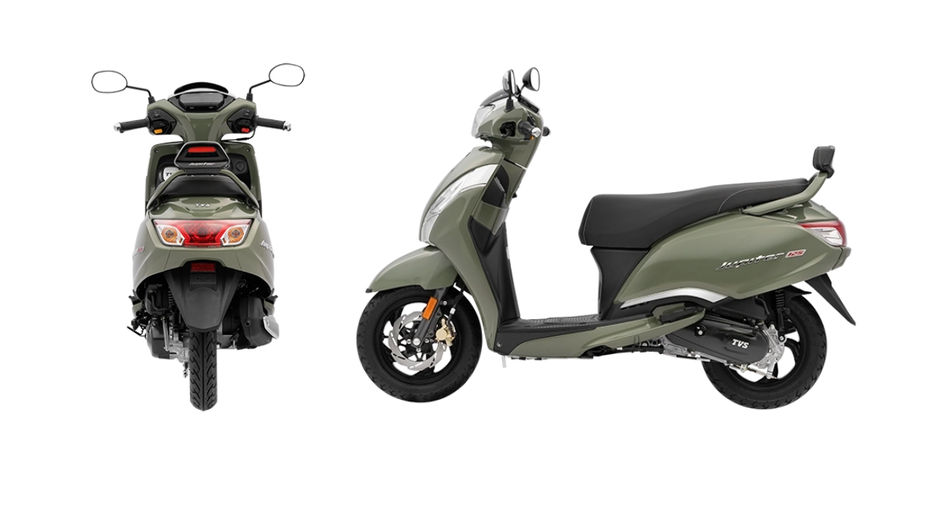
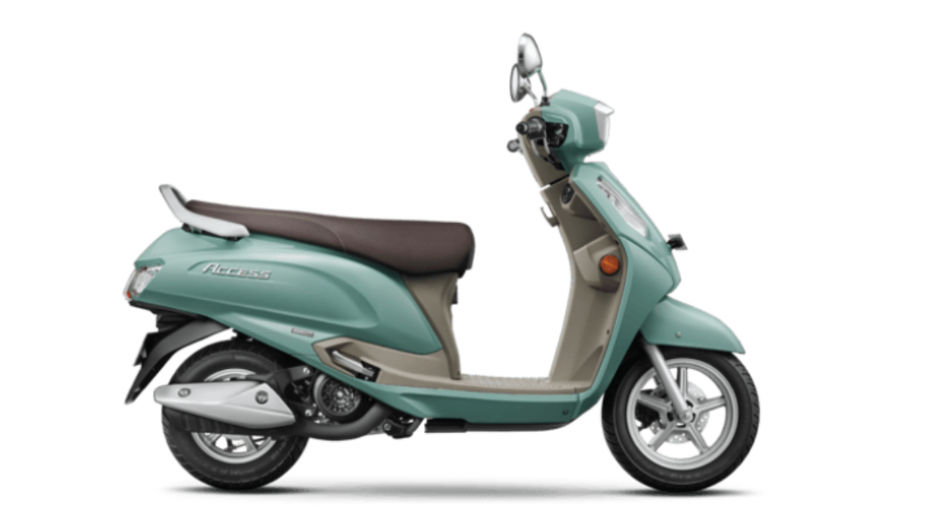
Design language is where the two differ significantly. The Access 125 sticks to a slightly more premium, neo-retro European styling with clean lines, a rectangular headlamp, round mirrors, and subtle chrome garnishing. The Jupiter 125 leans into a more straightforward yet contemporary styling, with a more angular headlamp visor, diamond-cut alloy wheels and a slightly sharper stance.
Ride and Handling
|
Specification |
Suzuki Access 125 |
TVS Jupiter 125 |
|
Frame |
Under Bone-Type |
Under Bone-Type |
|
Front Suspension |
Telescopic Fork |
Telescopic Fork |
|
Rear Suspension |
Single-sided, spring-loaded hydraulic shock absorber |
Single-sided, spring-loaded hydraulic shock absorber |
|
Front Tyre |
90/90-12, Tubeless |
90/90-12, Tubeless |
|
Rear Tyre |
90/100-10, Tubeless |
90/90-12, Tubeless |
|
Wheels |
Steel (Std) / Alloy (SE/RC) |
Alloy |
|
Front Brake |
Drum (Std) / Disc (SE/RC) |
Drum (Std) / Disc |
|
Rear Brake |
Drum (CBS) |
Drum (SBT) |
-
Both scooters are based on tubular steel underbone frames, and their suspension setup is similar in spirit, too. They both use telescopic forks up front, paired with an offset rear hydraulic shock absorber. However, TVS specifies a 3-step adjustable twin-tube emulsion shock at the rear of the Jupiter, giving riders a bit more control over ride stiffness and comfort.
-
Both have identical front wheel and tyre sizes, too. However, the Jupiter’s larger rear wheel should help it deal with rough roads more comfortably, while the Access’s smaller rear wheel contributes to its more agile feel.
-
Braking hardware is also broadly comparable, as both offer drum or disc options depending on the variant, and both lean on their own versions of the linked braking system. Both Suzuki’s Combined Braking System (CBS) and TVS’ Synchronised Braking Technology (SBT) work in a similar way, distributing braking force between the front and rear brakes when you apply the rear brake alone.
-
Suzuki’s single-channel ABS for the front brake, however, takes the braking safety and rider’s confidence to the next level.
Features and Technology
|
Feature |
Suzuki Access 125 |
TVS Jupiter 125 |
|
Lighting |
All-LED |
All-LED |
|
Lock |
All-in-one |
All-in-one |
|
Instrument Cluster |
LCD Display (Std/SE/RC/RC ABS) / 4.2-inch colour TFT Screen (RCT editions) |
Digi-analogue (Drum/Disc) / Reverse LCD Display (DT SXC) / LCD + TFT Dual Screen (SmartXonnect) |
|
Smartphone Connect. |
Bluetooth – Suzuki Ride Connect (only RC & RCT editions) |
Bluetooth – TVS SmartXonnect (only DT SXC and SmartXonnect editions) |
|
Connected Features |
Navigation, Manage Call/WhatsApp/SMS, Music Control, Calender & Weather Updates, Traffic and Speed Alerts & Digital Storage (RC & RCT editions) |
Navigation, Call/Social Media/SMS Alerts, News & Weather Updates (DT SXC & SmartXonnect) / Voice Assistance (only in SmartXonnect) |
|
Silent Electric Start |
Yes |
Yes |
|
Pillion Back Rest |
— |
Only on SXC & SmartXonnect |
|
Under-seat Storage |
24.4 litres |
33 litres |
|
Front Storage |
Dual Open Pockets |
Single Open Pocket |
|
Mobile Charging |
Front USB port |
Front USB port |
|
Fuel Filling |
Rear External Lockable Cap |
Front External Lockable Cap |
|
Side Stand Safety |
Side Stand Engine Cut Off + Alarm |
Side Stand Engine Cut Off + Alarm |
|
Braking Aid |
Combined Brake System (CBS) |
Synchronised Braking Technology (SBT) |
|
ABS |
Single-channel ABS (only on RC ABS & RCT ABS variants) |
— |
|
Warning lights |
Pass & Hazard Switch |
Pass Switch / Hazard Switch (Only in SXC & SmartXonnect) |
|
Idling Stop System |
— |
Advanced Idling Stop System |
|
Mild-Hybrid Tech |
— |
TVS iGO Assist (Only with DT SXC & SmartXonnect) |
-
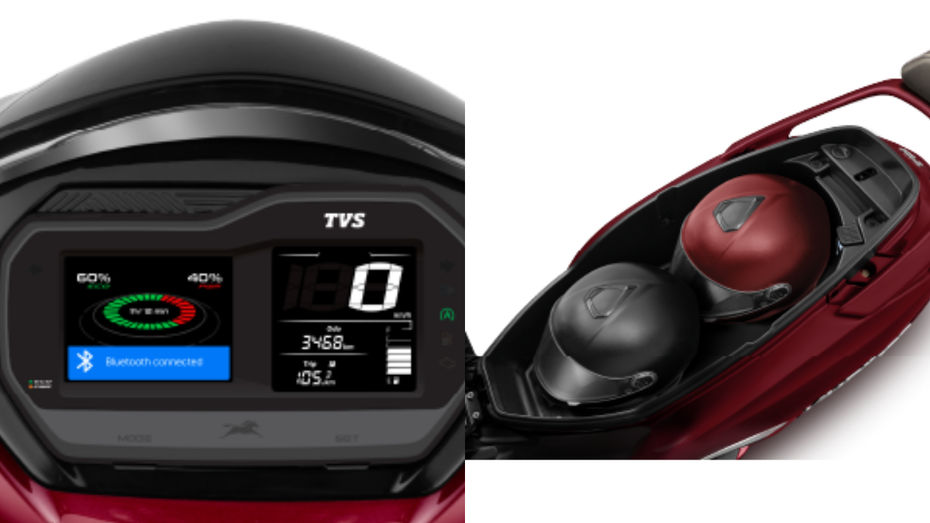
Both scooters play head-on when it comes to features. The distribution of features such as a TFT screen in the top-spec variants and connected tech starting on the mid-range is common too. Suzuki, however, offers a fully digital dash even on the entry-level Access 125, while the TVS Jupiter 125 gets an analogue speedo with a small LCD on its base trims.
-
Smartphone connectivity is being offered on specific variants of both scooters, but Suzuki also offers digital storage for documents, while the Jupiter 125 gets voice assist on the top-spec trim.
-
All-LED lighting is common to both scooters, and both also feature a pass switch and an all-in-one lock that lets you lock/unlock the handlebar and open the seat and fuel cap from a single keyhole.
-
The Suzuki Access does not get alloy wheels in the base variant, while TVS does not offer a hazard light switch in the Jupiter 125’s starting range.
-
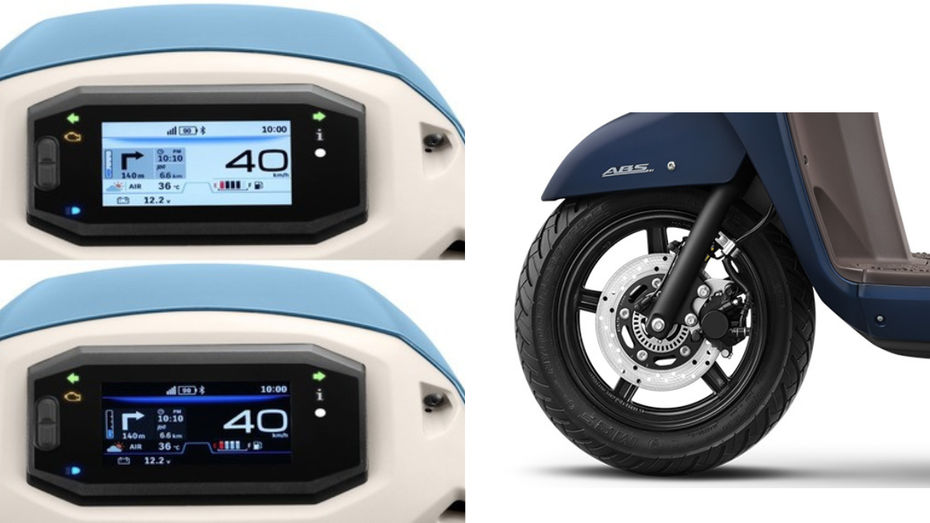
Both get similar safety features, including a side-stand engine cut-off and linked braking system. Suzuki, however, takes things a step further by offering segment-first ABS on select trims.
-
TVS makes a comeback with advanced fuel-saving tech, including an idle stop-start system and iGO Hybrid Assist in higher trims, which also helps it accelerate quicker off the line.
-
Both scooters feature a front USB charging port and storage pockets. While Suzuki offers dual front storage pockets, the Jupiter 125 counters with significantly larger underseat storage, designed to accommodate two decent-sized helmets or a week’s worth of groceries with ease.
-
Clearly, Suzuki focuses more on safety, while TVS leans a bit more towards convenience.
Engine and Performance
|
Specification |
Suzuki Access 125 |
TVS Jupiter 125 |
|
Engine Type |
4-stroke, Single-cylinder, SOHC |
4-stroke, Single-cylinder, SOHC |
|
Engine Cooling |
Forced Air-Cooled |
Forced Air-Cooled |
|
Displacement |
124cc |
124.8cc |
|
Fuel System |
Electronic Fuel Injection |
Electronic Fuel Injection |
|
Max Power |
8.4PS at 6,500rpm |
8.15PS at 6,500rpm / 8.56PS (with iGO) |
|
Max Torque |
10.2Nm at 5,000rpm |
10.5Nm at 4,500rpm / 11.1Nm (with iGO) |
|
Transmission |
CVT Automatic |
CVT Automatic |
-
Both have nearly identical powertrains and transmissions, and the difference in performance is noticeable only for a few seconds when TVS’ iGO Assist is charged to provide that extra boost.
-
Without the assist feature, the Suzuki Access 125 makes marginally more power, while the Jupiter 125 produces slightly more torque at relatively lower RPM. Real-world performance of both, however, is more or less similar.
-
The real difference is felt on the higher variants of the Jupiter 125, when the iGO Assist system is fully charged, delivering an extra electric boost that aids initial acceleration and makes overtaking quicker.
Verdict
If you want a unique road presence and have a thing for neo-retro design, the Suzuki Access 125 makes a stronger case. It also offers a longer seat, feels slightly more agile to ride, and is the only one in this segment to offer ABS. It also offers a fully digital dash as standard and a larger TFT screen on select variants.
The TVS Jupiter 125, however, focuses more on performance and practicality. It may look a bit simpler, but counters with a massive 33-litre under-seat storage, alloy wheels as standard, a pillion backrest on select variants, and a 5-year standard warranty. If style and safety are non-negotiable, the Access 125 is your pick. Otherwise, the Jupiter 125 is a more practical solution that can save you a few grands too.
Other Rivals
-
The Honda Activa 125 offers the Smart Remote Key feature on its H-SMART trim, while the Suzuki Access brings the segment-first ABS option.
User Reviews
- Value for moneyI chose by watching reviews and my friends also using it. I have a good openion on this scooty about mileage and safety. I asked many people about the review and found this is the best scooty for family. As of now very positive and very good. Good mileage and good for long distance ride. It is the best and safe. No back pain and no jerking. We can ride very safely and very comfortable. We can easily ride on Ghat roads also. It is suitable for both family and solo use also. People who go to college and office daily can buy this. Great comfort for family people with lots of joy. Mileage is good and very safe. Anyone can buy this scooty.Read More
- Best family 125CC scooter in IndiaFamily-oriented scooter and comfortable for city rides with soft suspension and reliability of TVS. The Jupiter is itself a very big name in the scooter market for over a decade and provides the complete, balanced package. The scooter is smooth, and the space is more than enough, the only problem is that it doesn't give confidence during overtakes. The service centre experience is also not good, but overall the scooter is a complete package. Yes, 100% to people who are looking for a no-nonsense scooter with comfort and space on daily rides from point A to B with decent power dynamics and a lot of space, and the scooter provides all required features.Read More
1 out of 1 found this helpful