

Suzuki Access 125 vs Hero Destini 125: Detailed Comparison


We help you choose between the two family scooters
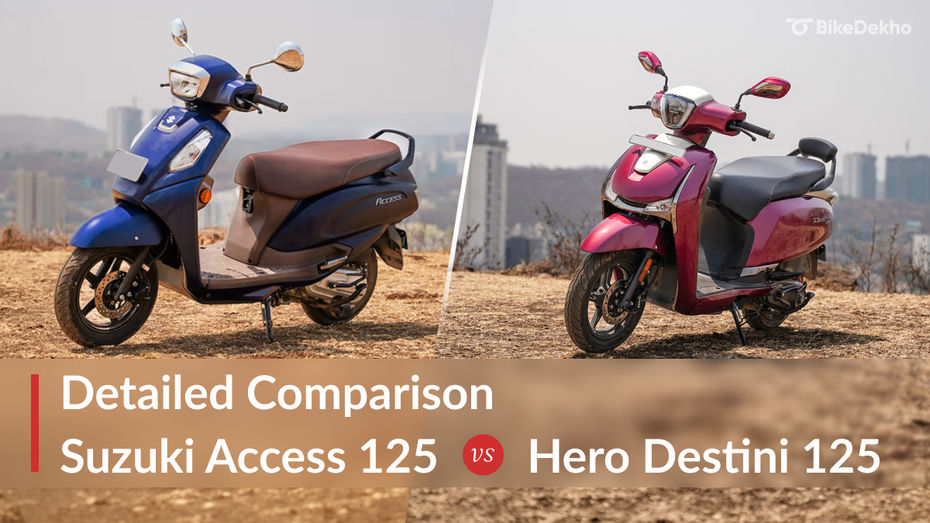
Be it everyday commuting, picking up a week’s worth of groceries on the way home, or even riding to a family function, a premium 125cc scooter can do it all in style. Maybe that is the reason this segment is picking up traction in the Indian two-wheeler market like never before. Further strengthening this appeal are offerings such as the new access 125 and the recently updated Hero Destini 125. Both bring their own take on premium neo-retro styling, modern features, and performance. If you’re planning to buy one and are torn between these two options, this detailed comparison will help you make a more informed choice based on your needs.
Price and Variants
|
Suzuki Access 125 |
Price (ex-showroom, Delhi) |
Hero Destini 125 |
Price (ex-showroom, Delhi) |
|
Standard Edition Drum Brake (Std) |
Rs 82,185 |
VX |
Rs 79,388 |
|
Special Edition Disc Brake (SE) |
Rs 87,827 |
ZX |
Rs 88,447 |
|
Ride Connect Edition Disc Brake + Alloy Wheels (RC) |
Rs 90,727 |
ZX+ |
Rs 89,119 |
|
Ride Connect TFT Edition (RCT) |
Rs 93,877 |
— |
— |
|
Ride Connect ABS Edition (RC ABS) |
Rs 96,230 |
— |
— |
|
Ride Connect TFT ABS Edition (RCT ABS) |
Rs 1,01,279 |
— |
— |
- The Hero Destini 125 undercuts the Suzuki Access 125 by roughly Rs 2,800 at the entry point.
-
The Destini comes in three variants, which offer nearly similar features to the first three variants of the Access. However, Suzuki offers the Access 125 in a total of six variants, giving buyers the option to step up to more premium features, such as a TFT display, ABS, or both, in the higher trims.
-
Hero snatches some points back by offering a more impressive 5-year/50,000km warranty as standard on the Destini 125, compared to the 2-year/24,000km standard cover on the Access 125.
-
Suzuki, however, compensates with its extended warranty packages of up to an additional 8 years/76,000km, offering a cumulative warranty of up to 10 years/1,00,000km for an additional cost.
Dimensions and Design
|
Specification |
Suzuki Access 125 |
Hero Destini 125 |
Difference |
|
Length |
1,835mm |
1,862mm |
-27mm |
|
Width |
680mm (Std) / 690mm (SE/RC) |
697mm (VX) / 703mm (ZX/ZX+) |
-17mm / -13mm |
|
Height |
1,155mm |
1,125mm |
+30mm |
|
Wheelbase |
1,260mm |
1,302mm |
-42mm |
|
Ground Clearance |
160mm |
162mm |
-2mm |
|
Kerb Weight |
107kg (Std) / 106kg (SE/RC) |
115kg |
-8kg / -9kg |
|
Fuel Tank |
5.3 litres |
5.3 litres |
Same |
|
Colour Options |
6 |
5 |
+1 |
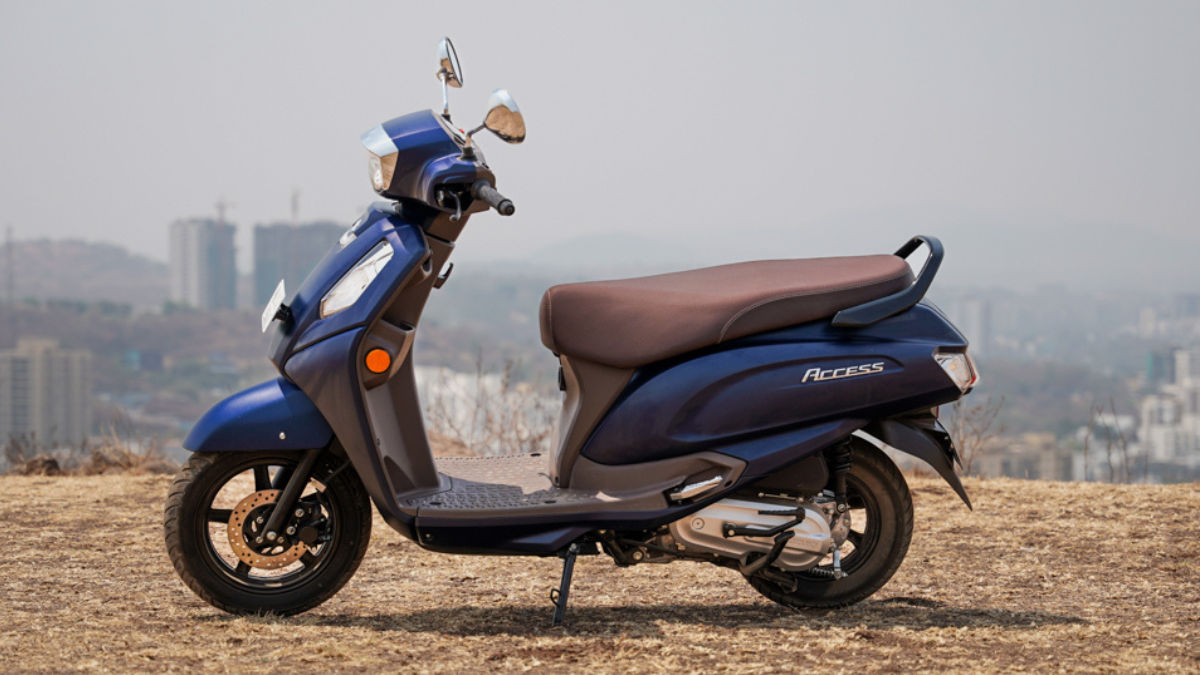
- The Suzuki Access 125 is lighter and a bit more compact than the Hero Destini 125, which should make it feel more accessible, agile and easy to navigate in traffic.
-
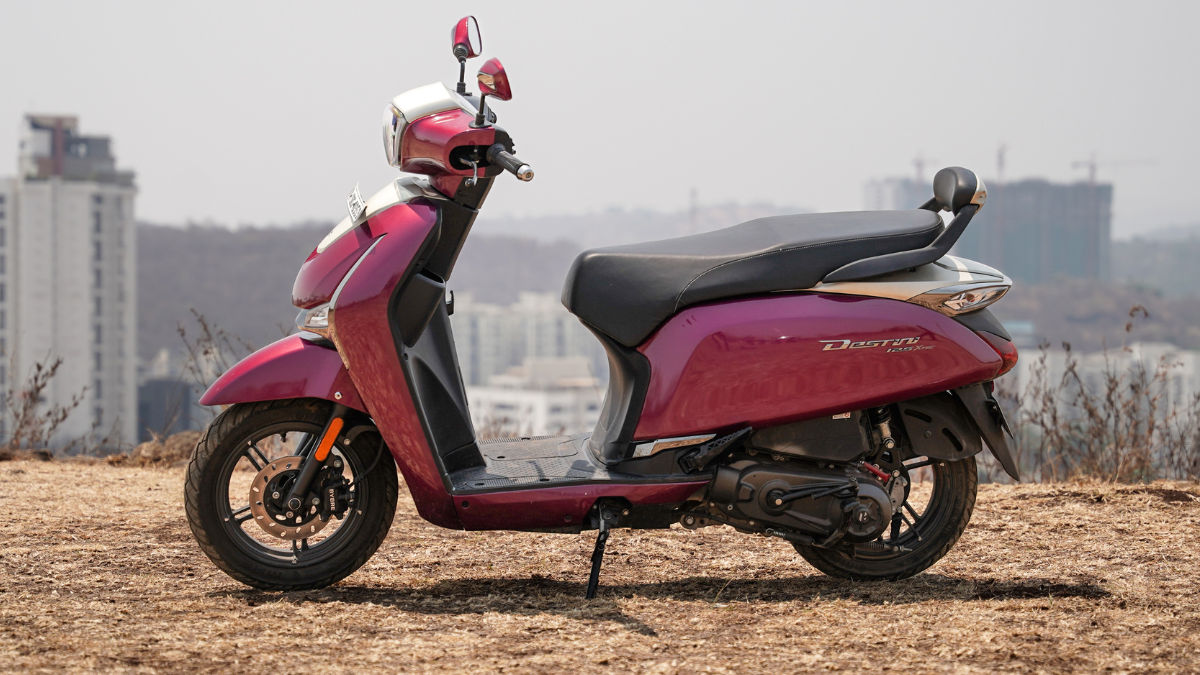
The Destini 125, meanwhile, should feel more stable and surefooted at higher speeds due to its extra heft and slightly longer wheelbase.
-
Both 125cc scooters offer more or less the same ground clearance, fuel tank capacity and colour options.
-
Visually, the two scooters follow the neo-retro design philosophy through very different routes. With its rectangular headlamp, round chrome mirrors and clean body panels, the Access 125 adopts a sleek design that appears to draw inspiration from classic European scooters such as the Vespa. The Destini 125 takes a different approach, seemingly drawing inspiration from the Lambrettas of the past. Its flowing bodywork and rounded elements give it a distinctive appearance that may feel a bit overdone to some but could appeal to those with a taste for more flamboyant styling.
Ride and Handling
|
Specification |
Suzuki Access 125 |
Hero Destini 125 |
|
Frame |
Underbone-Type |
Underbone-Type |
|
Front Suspension |
Telescopic Fork |
Telescopic Fork |
|
Rear Suspension |
Single-sided, spring-loaded hydraulic shock absorber |
Single-sided, spring-loaded hydraulic shock absorber |
|
Wheels Size |
12-inch (Front) 10-inch (Rear) |
12-inch (Front & Rear) |
|
Front Tyre |
90/90-12, Tubeless |
90/90-12, Tubeless |
|
Rear Tyre |
90/100-10, Tubeless |
100/80-12, Tubeless |
|
Front Brake |
Drum (Std) / Disc (SE/RC) |
Drum (VX) / Disc (ZX/ZX+) |
|
Rear Brake |
Drum (CBS) |
Drum (IBS) |
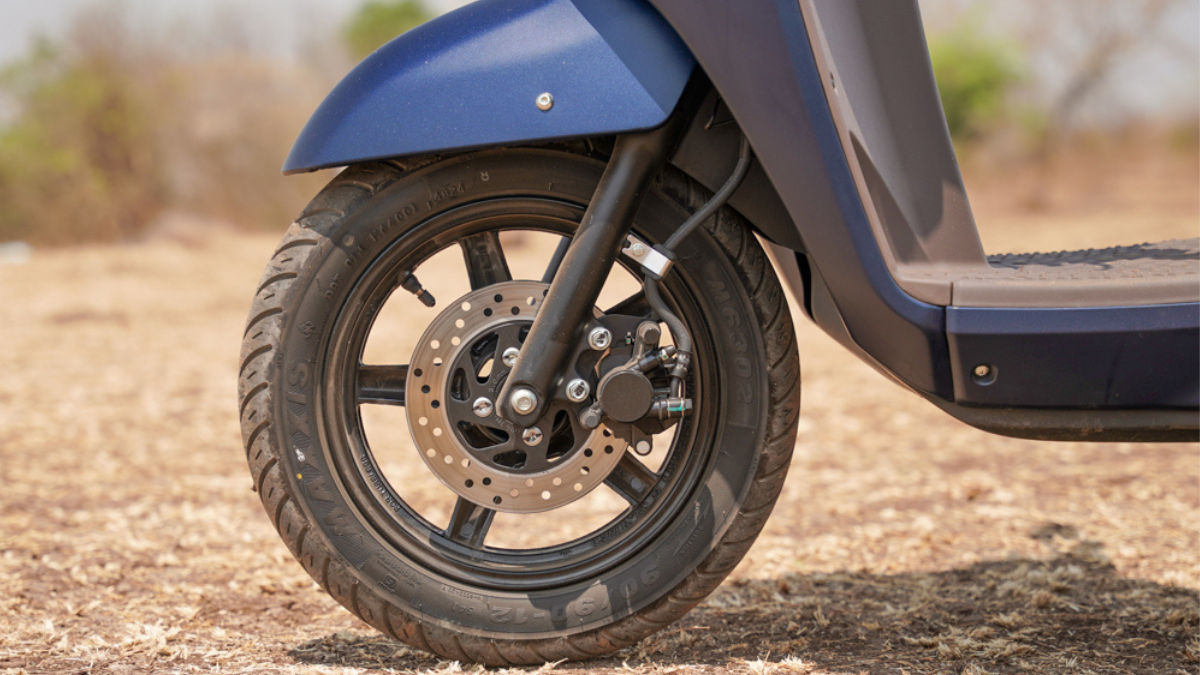
- Both scooters use a telescopic front fork with a hydraulic rear shock on a tubular steel underbone-type frame, so the fundamentals are broadly similar.
-
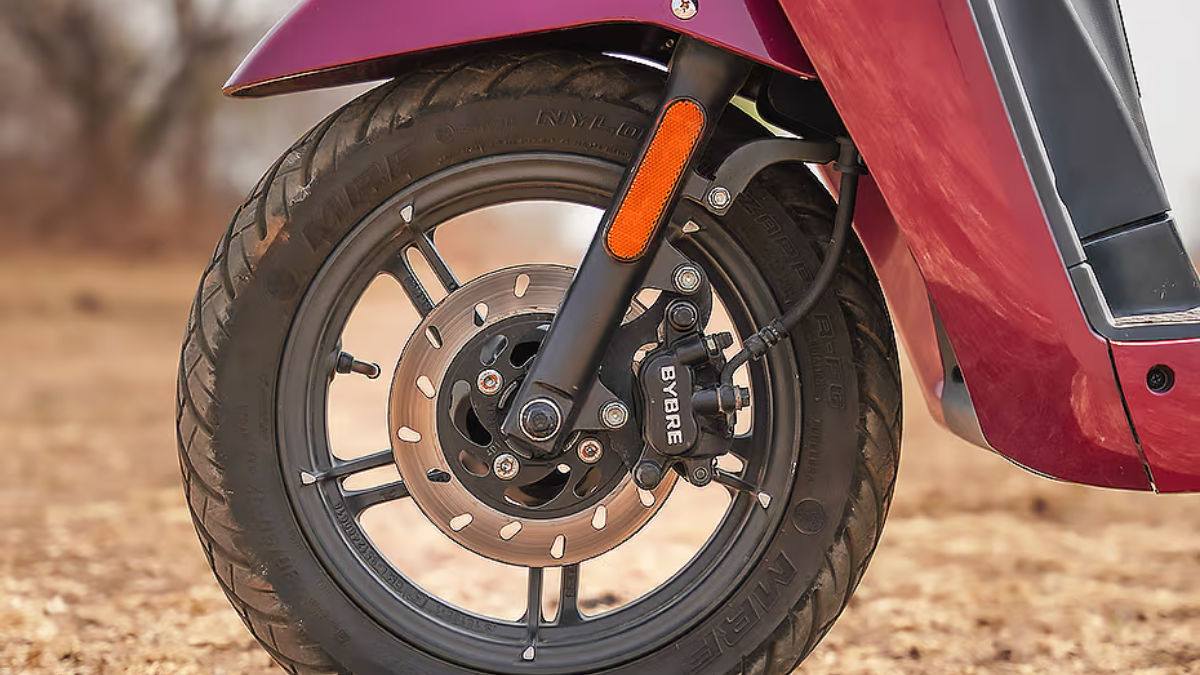
The real difference lies in the rear wheel sizes. Both scooters have similarly sized front wheels, but the smaller rear wheel gives the Suzuki Access 125 a more agile feel, whereas the slightly larger rear wheel helps the Hero Destini 125 deliver a more compliant ride.
-
The front tyres are identical, too, but the Destini’s slightly wider rear tyre gives it a marginal grip advantage.
-
Braking hardware is broadly similar, with both scooters offering drum brakes on the base and a front disc brake on all higher variants. Their respective linked braking systems also work in much the same way. Suzuki’s Combined Braking System (CBS) and Hero’s Integrated Braking System (IBS) both apply some braking force to the front wheel when the rear brake is used, helping provide more balanced braking and shorter stopping distances.
-
The Suzuki Access 125, however, gets a clear advantage with single-channel ABS on the front wheel, offering better braking control and added confidence, especially during hard braking.
Features and Technology
|
Specification |
Suzuki Access 125 |
Hero Destini 125 |
|
Headlamp |
LED With Position Lamp |
Projector LED with integrated DRL |
|
Tail lamp |
LED |
LED |
|
Extra Lighting Features |
Hazard Switch |
Auto-Cancel Winkers (ZX/ZX+) |
|
Instrument Cluster |
Digital LCD (Std/SE/RC/RC ABS) / 4.2-inch colour TFT Screen (RCT editions) |
Digi-Analogue (VX) / Digital LCD with Bluetooth & Turn-by-Turn Navigation (ZX/ZX+) |
|
Smartphone Connectivity |
Bluetooth – Suzuki Ride Connect (except Std & SE editions) |
Bluetooth (except VX trim) |
|
Connected Features |
Navigation, Manage Call/WhatsApp/SMS, Music Control, Calendar & Weather Updates, Traffic and Speed Alerts & Digital Storage (RC & RCT editions) |
Navigation, Call & Message Alerts (ZX & ZX+ trims) |
|
Auto-Cancel Winkers |
— |
On ZX & ZX+ |
|
Central Locking System |
All-in-one, Key-based |
All-in-one, Key-based |
|
Starter |
Kick and Electric |
Kick and Electric |
|
Under-seat Storage |
24.4 litres |
19 litres |
|
Front Storage |
Dual Open Pockets |
Singe Open Pocket |
|
USB Charging |
Front USB port |
Front USB port |
|
Fuel Filling |
External Lockable Cap |
External Lockable Cap |
|
Pillion Back Rest |
— |
On ZX & ZX+ |
|
Wheels Type |
Steel (Std) / Alloy (SE/RC) |
Alloy |
|
Side Stand Safety |
Side Stand Engine Cut Off + Alarm |
Side Stand Engine Cut Off + Alarm |
|
Braking Aid |
Combined Brake System (CBS) |
Integrated Braking System (IBS) |
|
ABS |
Single-channel ABS (only on RC ABS & RCT ABS variants) |
— |
|
Idling Stop System |
— |
i3S Technology |
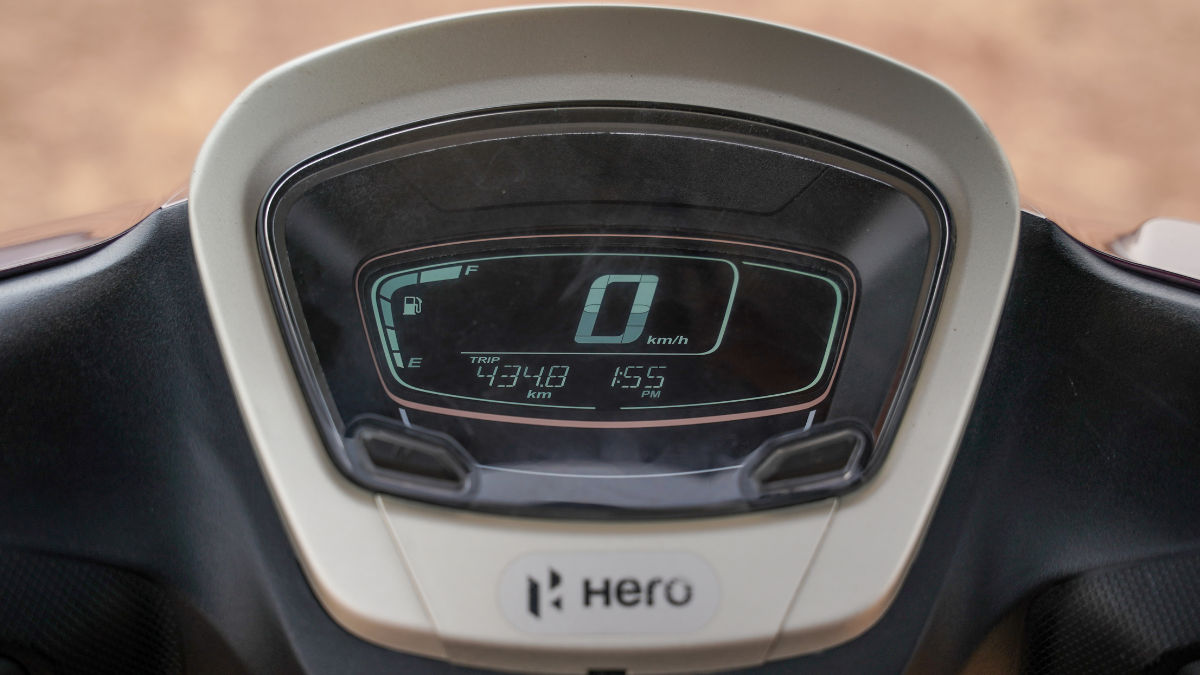
- While both offer all-LED lighting, the Hero Destini 125 features a more advanced projector LED headlamp and auto-cancelling turn indicators.
-
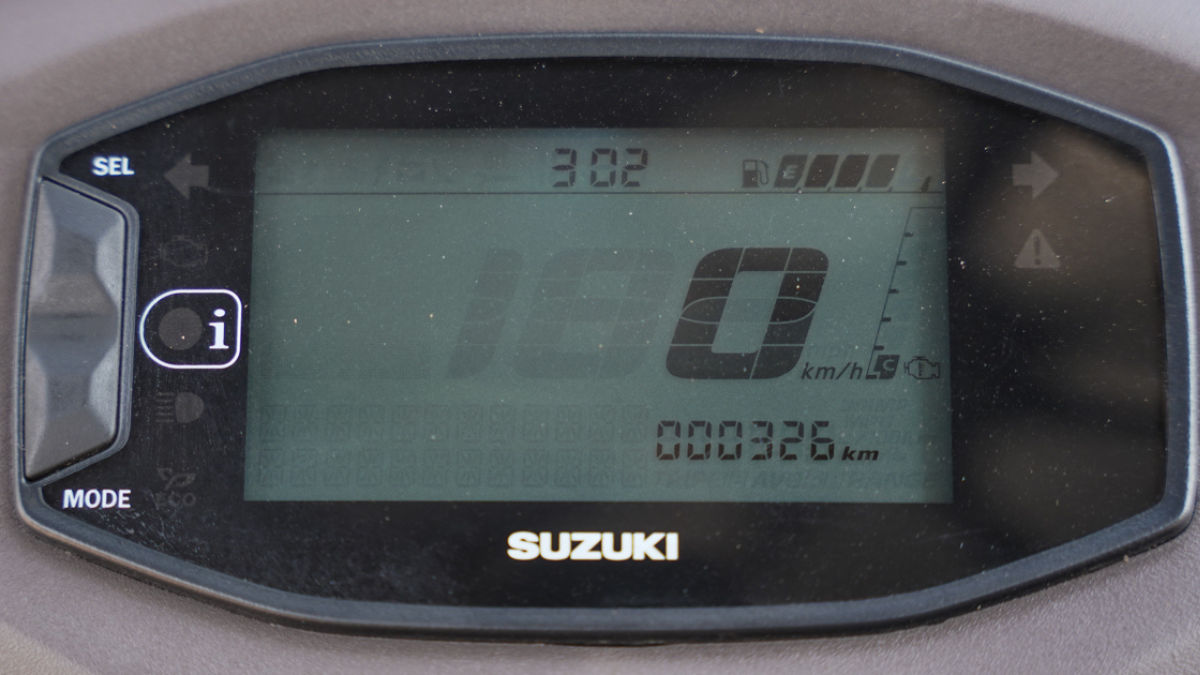
The Suzuki Access 125, however, takes a bigger leap by offering a fully digital instrument cluster right from the base variant, along with a more premium TFT colour screen on select variants.
-
Both scooters offer smartphone connectivity via Bluetooth and turn-by-turn navigation on their higher variants. However, Suzuki takes the lead here as well with a more extensive suite of connected features compared to the Destini.
-
Suzuki also holds a clear lead in everyday practicality, with more spacious under-seat storage that is about 5.4 litres larger than the Hero’s. It also gets dual front storage pockets compared to the Destini’s single pocket, while both scooters offer a USB charging port near the storage area.
-
Both scooters feature a lockable external fuel cap and an all-in-one key system that lets you lock/unlock the scooter and open the under-seat storage and the fuel cap through a single keyhole. Both also feature alloy wheels throughout their trim range, except for the base Access 125.
-
Hero's i3S idle stop-start technology comes standard across the Destini 125 range. It automatically switches off the engine during brief stops, such as at traffic signals, to help improve fuel efficiency.
-
Suzuki, however, takes the lead in safety with single-channel ABS on select variants of the Access 125, enhancing rider confidence in tricky situations. This comes in addition to other safety features, such as linked braking and side-stand engine cut-off systems, which are common to both scooters.
Engine and Performance
|
Specification |
Suzuki Access 125 |
Hero Destini 125 |
|
Engine Type |
4-stroke, Single-cylinder, SOHC |
4-stroke, Single-cylinder, SOHC |
|
Engine Cooling |
Forced Air-Cooled |
Forced Air-Cooled |
|
Displacement |
124cc |
124.6cc |
|
Fuel System |
Electronic Fuel Injection (EFI) |
Electronic Fuel Injection (EFI) |
|
Max Power |
8.4PS at 6,500rpm |
9.1PS at 7,000rpm |
|
Max Torque |
10.2Nm at 5,000rpm |
10.4Nm at 5,500rpm |
|
Transmission |
CVT Automatic |
CVT Automatic |
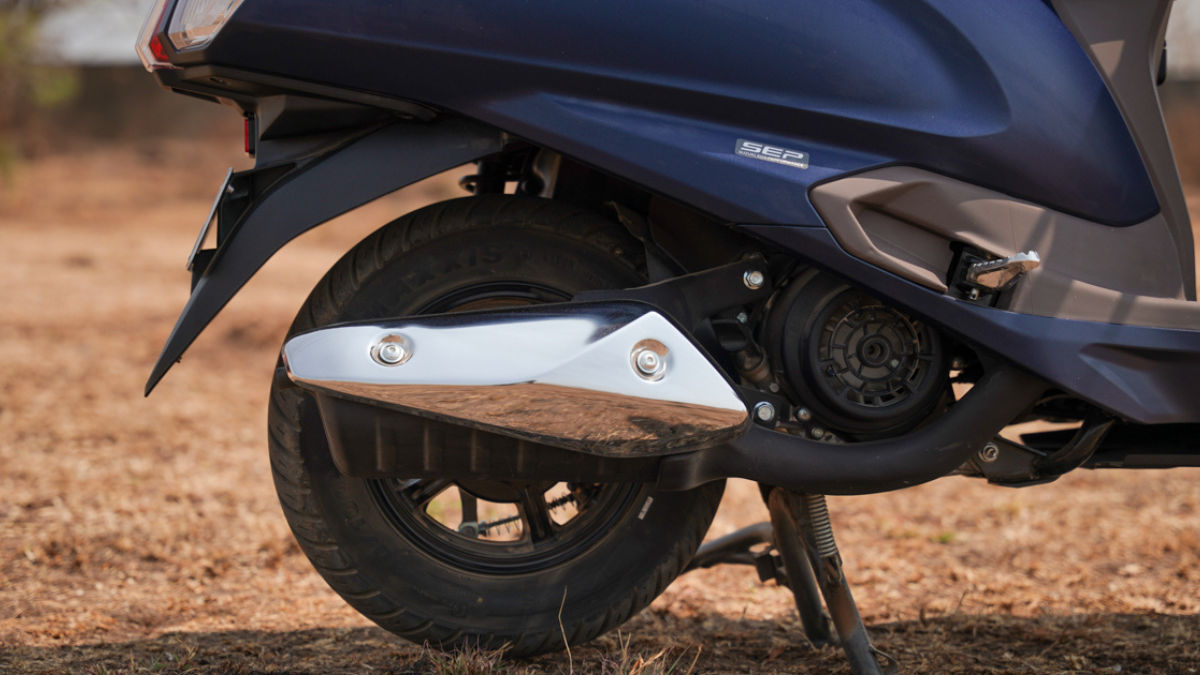
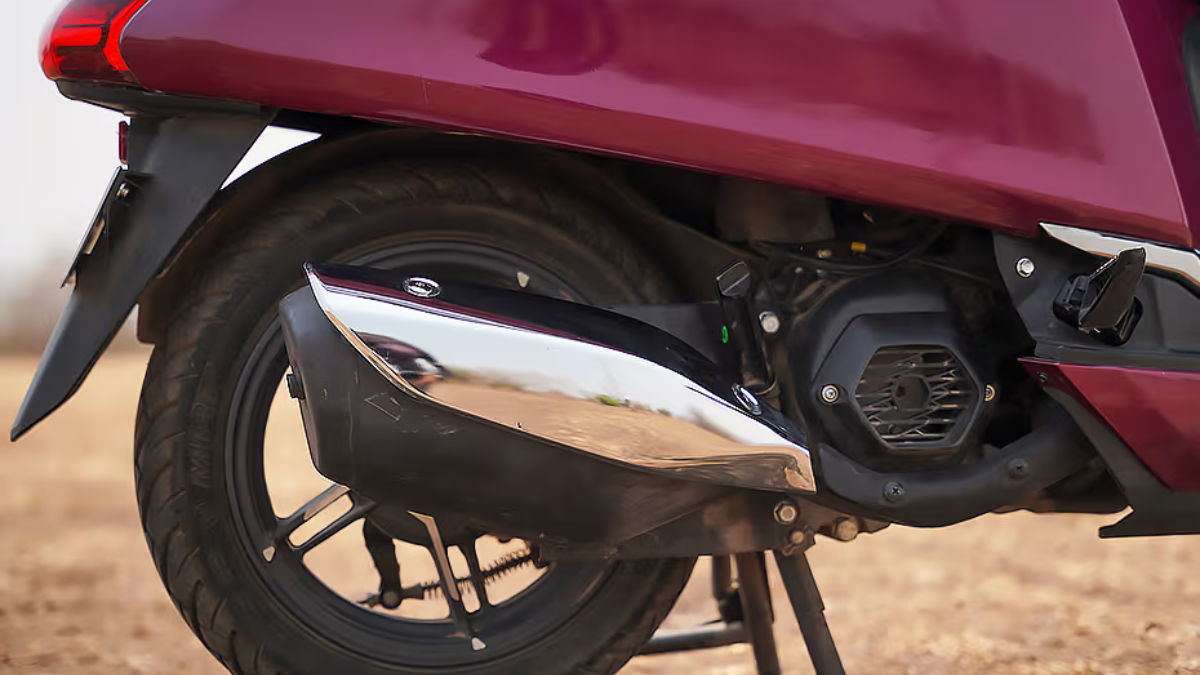
- The fundamentals of their engines are nearly the same, but they are tuned slightly differently.
-
The Hero Destini 125 delivers about 0.7PS and 0.2Nm more than the Suzuki Access.
-
The Access 125, meanwhile, counters with significantly less weight and early peaking torque.
-
Both scooters should feel comparable in real-world performance, and both use the same type of transmission: a continuously variable transmission (CVT).
Verdict
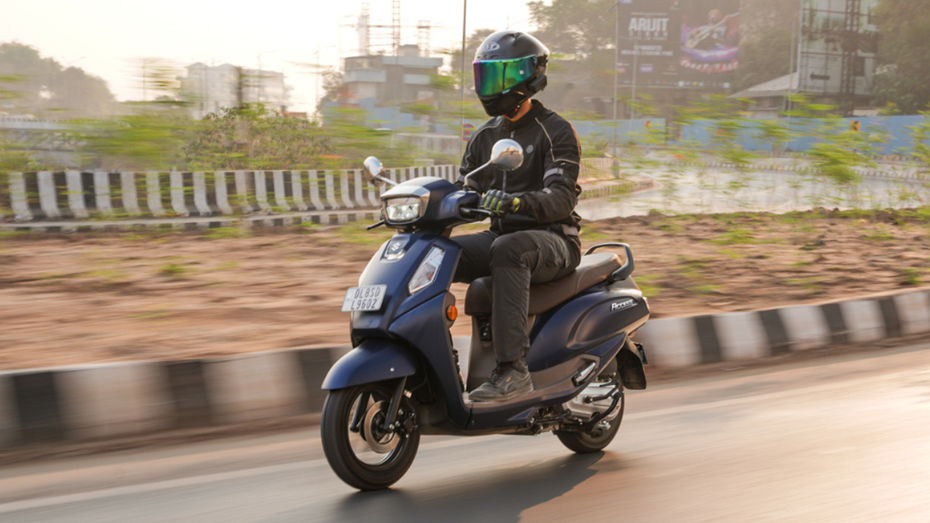
The Suzuki Access 125 remains the more complete package, combining class-leading safety with a good balance of practicality and performance while also looking elegant. It brings a clean design that makes it lighter and suits riders of all ages, generous under-seat storage, richer connected features, segment-first ABS and a wider range of variants, making it one of the most well-rounded scooters in the segment.
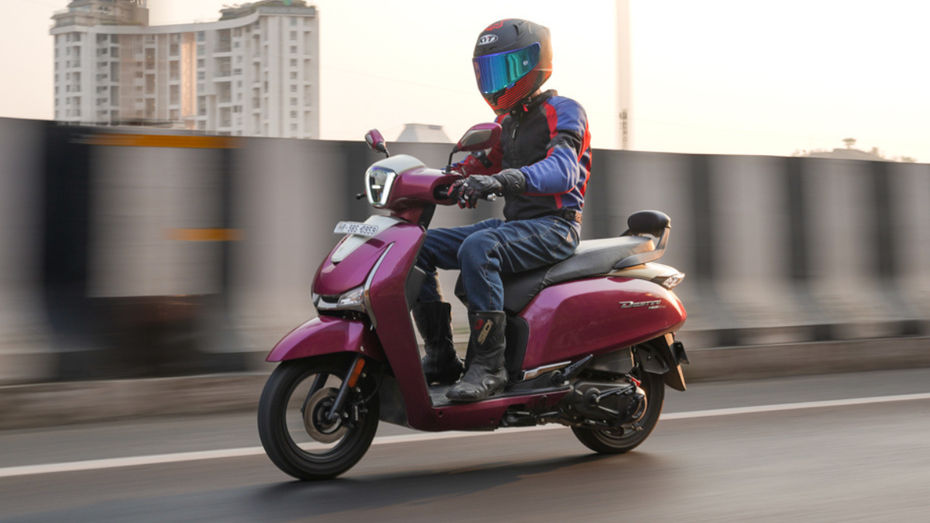
The Hero Destini 125, meanwhile, offers genuine value of its own, with a slightly lower starting price, a much longer standard warranty, and features such as i3S and a pillion backrest, focusing on efficiency and comfort. Plus, it genuinely has a unique design if you prefer to stand out in the crowd. If affordability and long-term ownership are important to you, and you can live with the slightly higher weight, go for the Destini 125. Otherwise, the Suzuki Access 125 is a better all-rounder for a slightly higher upfront cost.
Comparisons With Other Rivals
-
The Honda Activa 125 stands out with its remote key fob, while the Suzuki Access’ segment-first ABS is its biggest highlight.
-
The TVS Jupiter 125 focuses more on practicality and storage space, while the Access 125 prioritises sharper handling and safety.
User Reviews
- Value for moneyNice and amazing, so economical. Loved the top model with abs, i wanted for best mileage scooter and found it 55kmpl, just wanted to do this year, it has clutch and brake while throttle body and my ev scooter went through the same time as well as the other one died in a few minutes to get the second one.Read More
- A great city commuter for a value seeking customerIt had a great balance between power (9 BHP) and Mileage (Company Claims it to be 59 kmpl), which in comparison are greater numbers than what established rivals like the Activa 125 and Jupiter 125 to name a few. Ride comfort has been good due to the suspension being tuned appropriately. It does not feel bouncy but can run out of breath in speeds above 70 Km/L. The accelerator cable needs timely maintainance although replacing the same does come under company warranty are often them not. In terms of specifications, it is amongst the most powerful family scooters in the 125cc segment and the pickup feels more than adequate in the city. Company claims the mileage of the vehicle to be 59 Km/L and the maximum I have achieved is around 57 Km/L which is quite close. I would recommend to buy the base variant with drum brakes and a digi-analog meter as it is good value for money.Read More