

Yamaha Aerox-E: Explained In Images


Yamaha’s first in-house electric scooter for India borrows the Aerox 155’s style but the ride experience tells a different story.
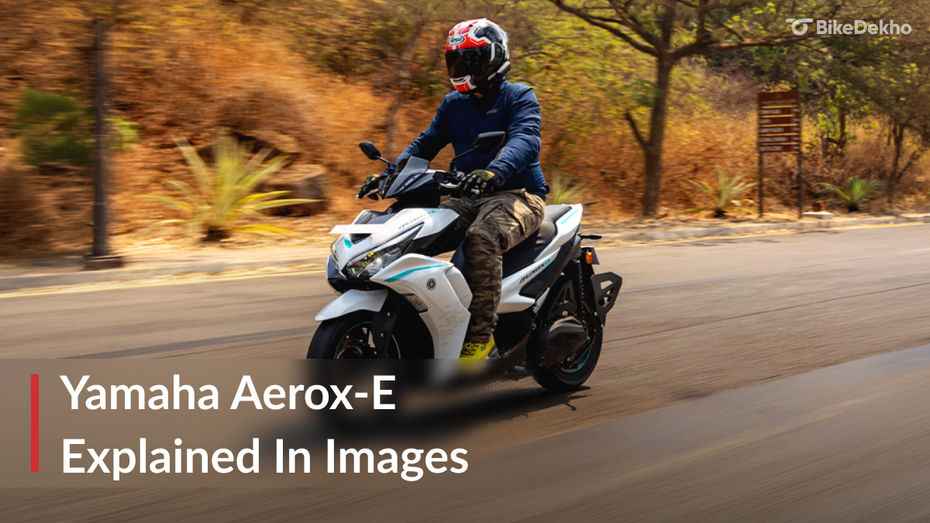
Yamaha has finally entered the premium electric scooter segment with the launch of the AeroxE in India. The Yamaha Aerox-E borrows its sporty design from the popular Yamaha Aerox 155 but wraps it in a distinct EV character. It features twin removable batteries, and a boost button for quick bursts of speed. However, in my opinion there is a significant gap between its aggressive appearance and its actual on-road performance. We explain all the aspects in images
Design
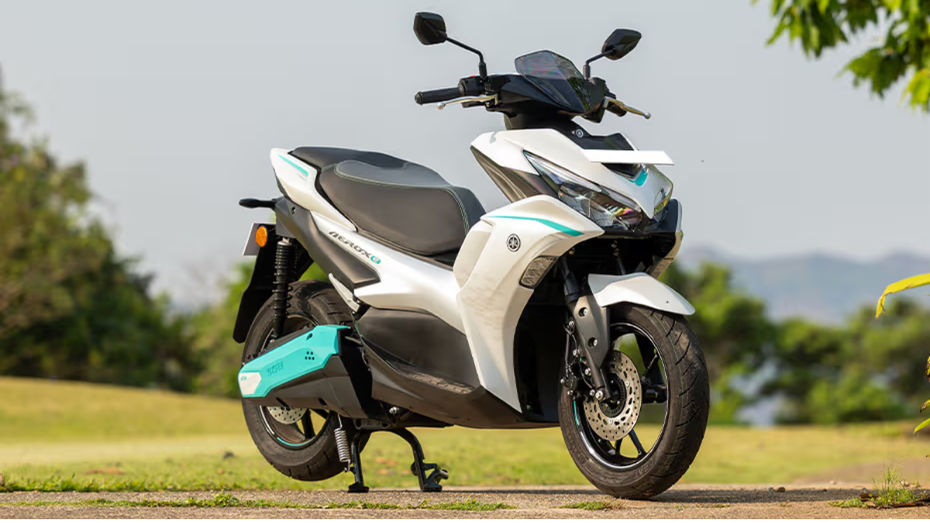
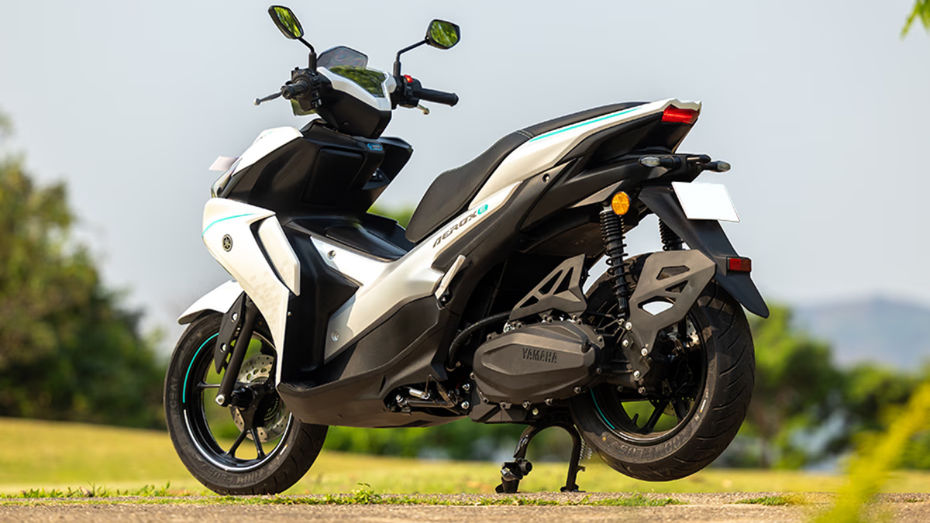
The Aerox-E replicates the petrol Aerox's aggressive, maxi-scooter stance. It shares its silhouette almost entirely. The scooter comes in a single white colourway with green accents to signal its electric identity. While we’d have liked to see in more colours, the standard colour still manages to look premium. If you put both the petrol and electric scooter side-by-side, you’ll notice the e-scooter has a reworked headlamp surround, a unique seat pattern, and a distinct swingarm shroud.
Details:
-
Tech is a strong point for the segment. The Aerox-E gets a colour TFT instrument console with turn-by-turn navigation.
-
It also has a Smart Key with an answer-back function. Other features include a two-level seat, front USB charging port, single-channel ABS, and traction control—both rare inclusions in Indian EV scooters.
-
The TFT screen is legible even in direct sunlight, and the key fob is also easy to use.
Performance
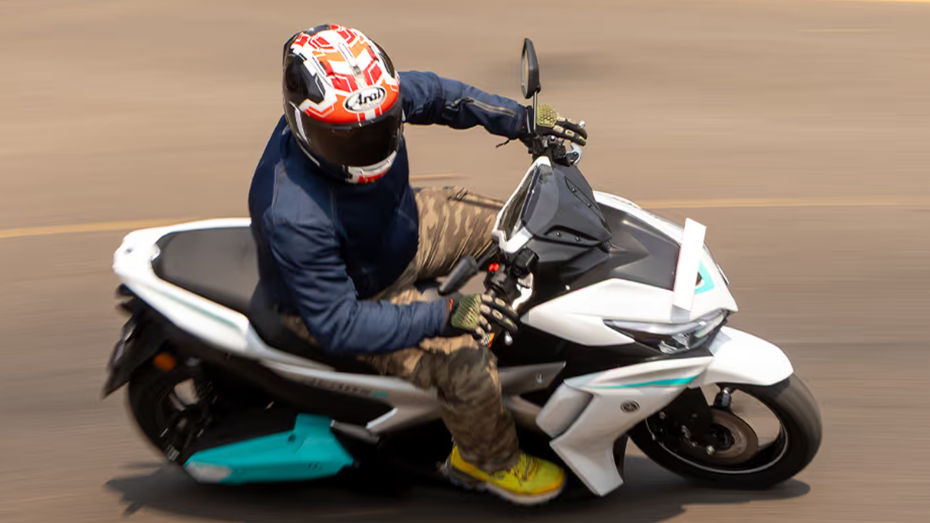
On paper, the 9.4 kW motor with 48 Nm of torque sounds spirited for Aerox-E, but it’s a different story altogether once we rode the e-scooter. It has three modes: Eco, Standard, and Power. Eco mode is very basic, and is ideal only to limp home on a low charge. The throttle response in Standard mode is sluggish, making overtakes in regular traffic a visible effort. Even Power mode (though better than Standard mode) feels duller than rivals like the Ather 450 Apex.
Details:
-
A Power Boost button provides extra acceleration for just 10 seconds. It requires a cooldown of approximately one minute before it can be used again.
-
In my opinion, the Power Boost function should’ve been a full-time mode rather than just a short-duration feature.
-
A claimed top speed of 95.5kmph does little to offset the overall dull feel, which is a departure from the petrol Aerox’s reputation for fun and agility.
Range and Practicality
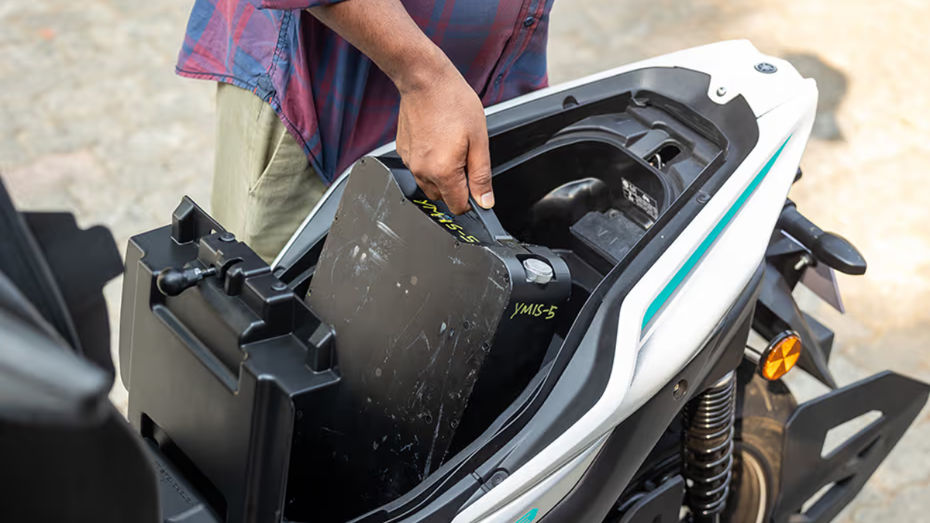
The Aerox E uses twin 1.5 kWh removable battery packs, for a total of 3 kWh. This setup creates two major problems in real-world use. First is range. Against a claimed figure of 117 km. our testers expect only a real-world range of around 60-70km. This might even go further down to around 50km if ridden aggressively. Second is storage. Both batteries occupy the boot, leaving no room for a full-face helmet; even a laptop bag fits with difficulty.
Details:
-
Charging takes 3 hours and 10 minutes for one pack or 6 hours and 20 minutes for both.
-
You can remove the battery (each weighs 14kg) to charge at home, but you’ll have to spend extra on a home charging dock that costs Rs 18,000.
Underpinnings
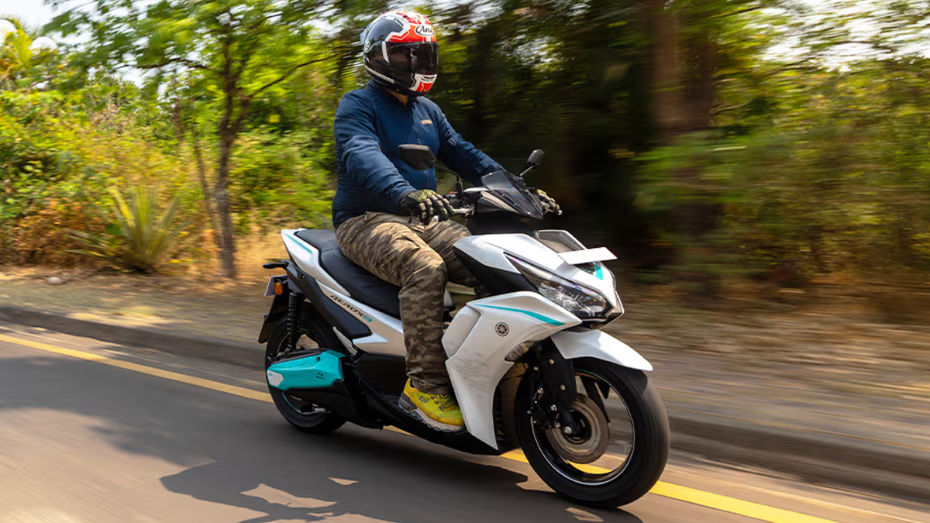
The Aerox E uses a telescopic fork and twin rear shock absorbers. Brakes include discs at both ends.
Details:
-
The suspension also suffers from the added battery weight. The setup feels unbalanced, with the front absorbing bumps reasonably well but the rear tossing the rider. We also noted a rattling noise from the removable packs.
-
While it tips into corners easily, the weak performance spoils the enjoyment rather quickly.
BikeDekho Says
Yamaha's first made-in-India EV is positioned as a premium product. However, with the limited performance it offers, justifying the steep price tag Rs 2,81,600 (ex-showroom Delhi) is quite difficult. That’s almost twice the price of a regular petrol-powered Aerox!
The problem becomes really clear when you factor in other sporty electric scooters in India such as the Ather 450 Apex and Simple Ultra – both of which offer much better performance for around Rs 80,000 less. Until Yamaha addresses the core issues of performance and range, the scooter risks feeling like being far from a finished Japanese product.