

- English
- हिंदी
TVS Apache RTR 160 4V vs Bajaj Pulsar N160 SS: Image Comparison


Two sporty 160cc streetfighters, two different approaches: here's how they compare side by side
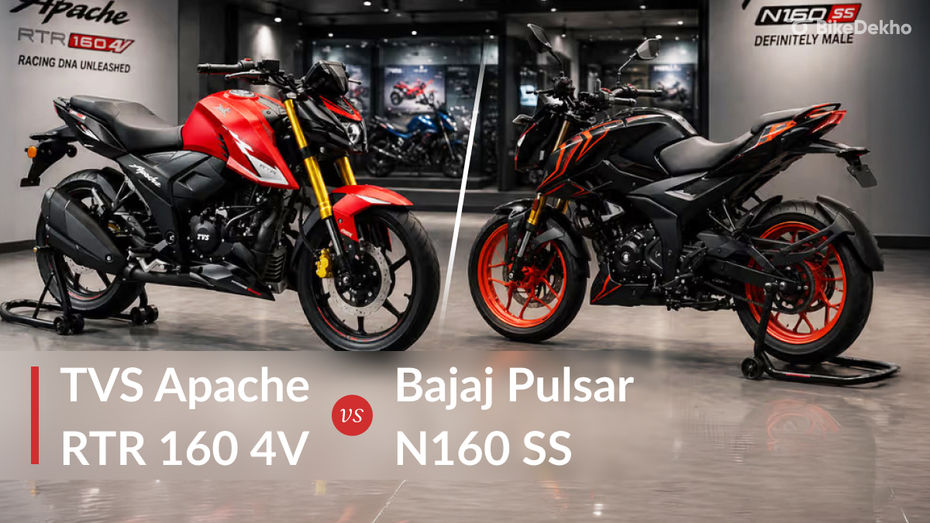
The 160cc naked space in India has turned into one of the most closely fought segments around, and the TVS Apache RTR 160 4V and the Bajaj Pulsar N160SS are the sharpest examples of it. The top-end Apache costs Rs 1 39 440, whereas the Bajaj Pulsar N160 SS sits at Rs 1,42,585 (both ex-showroom Delhi). Here's how they stack up side by side:
Front Design: Somewhat Identical
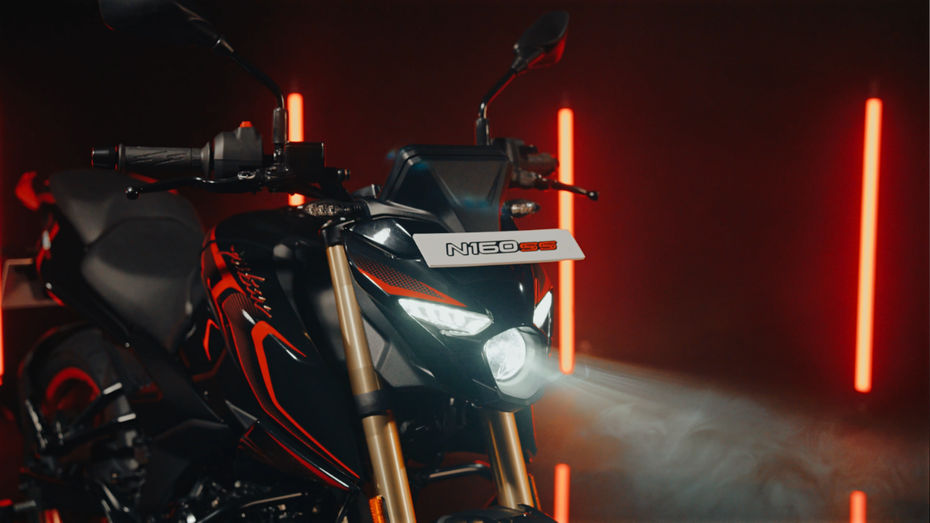
The previous-gen Apache looked unique with the insect-like LED headlight. However, the new-gen Apache looks somewhat similar to the Bajaj Pulsar N160SS as both get a round projector LED headlight flanked by LED DRLs. That said, the Apache’s headlight design looks a bit more aggressive. When it comes to premium quotient, what helps both the bikes is the fat gold-finished inverted fork.
As for the instrument console, both of them get a TFT unit with connectivity and tons of information. However, while the Apache gets turn-by-turn navigation, Bajaj takes one step further with a full-fledged Google Maps mirroring functionality. This makes navigating through unknown areas a whole lot easier.
Side Profile: Chequered Flair vs Pinstriped Presence
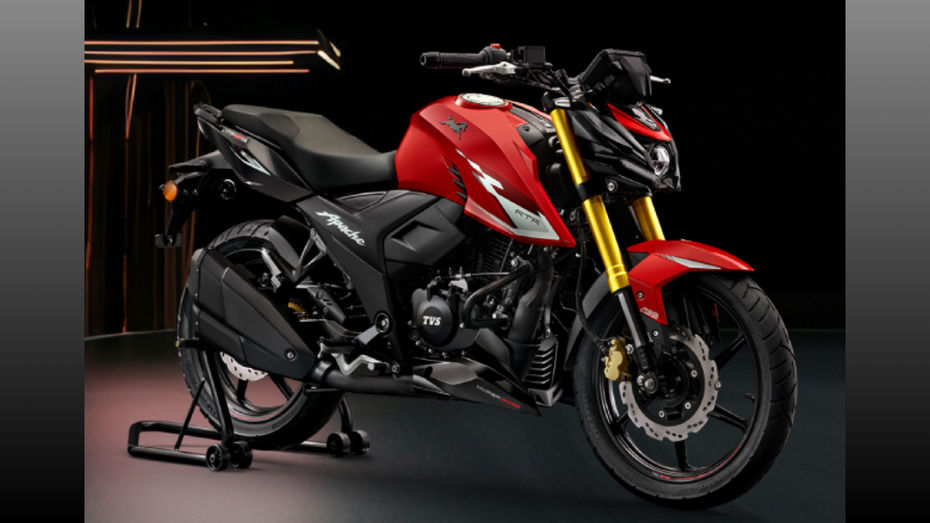
The Apache’s power comes from a 159.7cc, 4-valve, air-oil-cooled single that puts out 17.55PS at 9,250rpm and 14.73Nm at 7,500rpm in Sport mode, with milder outputs in Urban and Rain. On the other hand, the Pulsar is a little more powerful, as its 164.9cc, 4-valve, air-oil-cooled engine makes a segment-topping 18.5PS at 9,500rpm and 14.4Nm at 8,000rpm. This one also gets an electronic throttle and four ride modes. Visually, both engines are fully blacked out with the respective brand logos proudly displayed on the engine case.
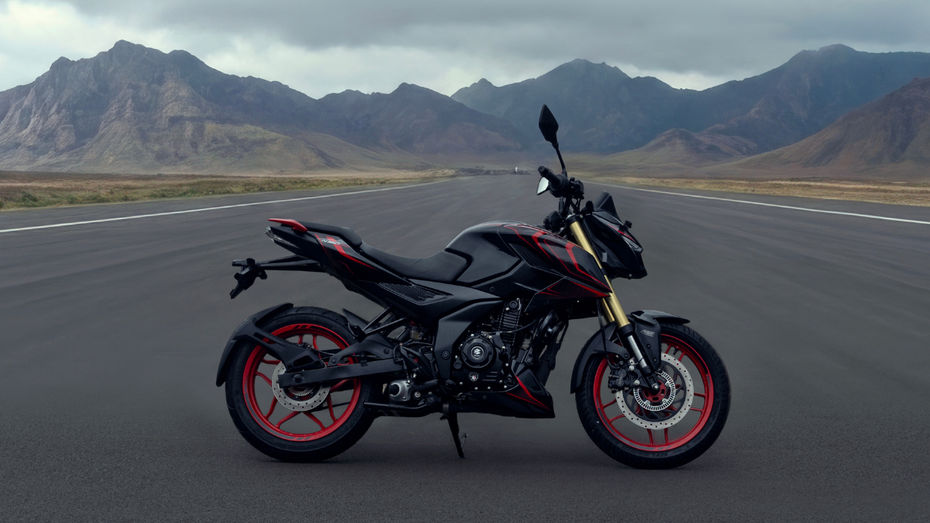
While the Apache’s tank extensions look sharp and taut, the Pulsar’s panels are a bit more extended. We quite like the chequered flag highlights on the Apache’s tank, whereas the Pulsar uses more street-race-esque pinstripes. Both get a stylish engine cowl and angular elements on the side panels. Interestingly, while the Apache’s exhaust is large and bulbous, the Pulsar keeps its visual mass centered with a subtle underbelly exhaust.
Rear Design: Bullpup Bark vs Big-Bike Bulk
At the back, the Apache has a slim tail unit finished off with an LED lamp, staying true to the streetfighter look it's carried for years now. The N160 SS, on the other hand, goes for a chunkier tail section with the iconic but slightly more angular twin-strip LED tail lights.
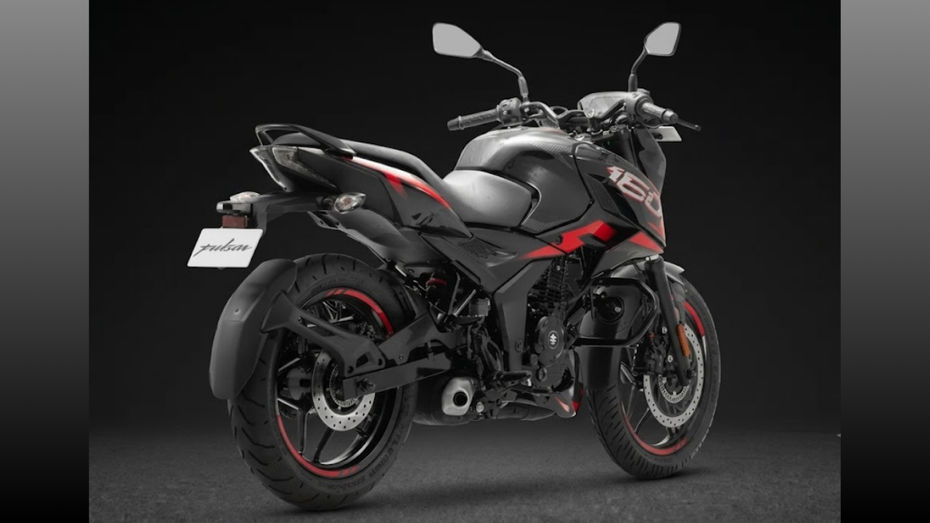
While the Pulsar’s underbelly exhaust makes the rear look a bit cleaner, the flow is interrupted by the tyre hugger. Sure, it may be very practical in keeping the splashes away, but it doesn’t help with the looks on what’s supposed to be a sporty bike.
To sum up, both bikes look very sporty and are loaded with features. That said, the Pulsar N160SS’ full-fledged connectivity should make it a bit more practical in daily commutes. As to which one rides better, that’s something we’ll be able to judge once we get to ride them both. That’s happening soon, so stay tuned!

Bajaj Pulsar N160 S User Reviews
- awesome 👍Upgrade jabadast hai lekin 18.5 power hone ke bawjud 5 gear hi hai, kam se kam 6 gear dena chahiye tha bajaj walon ko. Chalate samay 6th gear ki kami mahsoos hoti hai. 6th gear hota to chalane me or bhi maja aata. Top speed bhi kam hai. 6th gear hota to aaram se 140-145 top speed hoti. Baki sab thik hai.Read More7 3
- Best bike in this segmentMaine N160 SS isliye chuni kyunki power aur mileage ka balance mast hai. 160cc engine city me smooth aur long ride me bhi bore nahi karti. ABS, digital meter aur wo aggressive styling, paise wasool lagti hai. Mere hisaab se N160 SS ab tak ekdum jhakaas hai. City me halki, traffic me easy. Highway pe 90-100 pe bhi stability solid hai. Seat comfortable, mileage 44 mil rahi. Bas initial gear thoda tight hai, baaki sab mast. Ye bike to mai jarur recommend karunga. Roz ke kaam or kabhi long ride dono ke liye N160 SS best hai. Look premium, mileage 45, aur maintenance bhi kam hai. Agar 1.6 lac me sporty practical bike chahiye to aankh band karke le lo.Read More5 9
- overview of this newly launched bikeThis bike is good in performance and safety and i have like to white colour with newly graphics in bike and I also like there features in bike but I don't not like to digital console as comparing of previous n160. and all these of bajaj pulsar bike are also excellent in power, safety, performance and mileage according to weight, there bike and its also buy a affordable price on market.Read More7 8