

Understanding RPM in Motorcycle Engines


Learn how to use your bike’s engine in a better way with this detailed guide
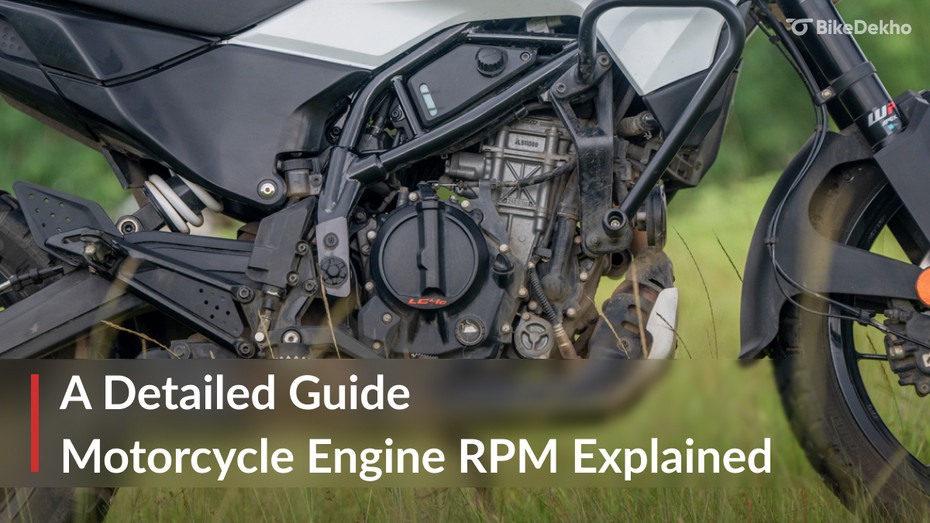
When discussing motorcycle engines, people typically discuss displacement, power, torque, the number of cylinders, and the type of cooling. And why not, because these things are believed to be primary in defining a machine's performance. However, there is one more crucial factor, often used in conjunction with power and torque delivery, but usually overlooked in discussions. We are talking about the term "RPM," which defines the character of your motorcycle. So, let us tell you what it actually is and why it is more important than the peak power and torque figures of an engine.
What Does RPM Really Mean?
RPM stands for revolutions per minute, a way of measuring how fast something rotates. For example, if a fan makes 100 complete turns in one minute, you’d say it’s turning at a speed of 100 RPM. In the case of a motorcycle, the crankshaft works in the same way, just much faster. The crankshaft translates the up and down motion of the piston into rotational motion, which ultimately powers the bike’s rear wheel. The RPM of a motorcycle tells you how many turns the crankshaft completes in a minute inside its engine. That’s why it is also referred to as the engine speed.
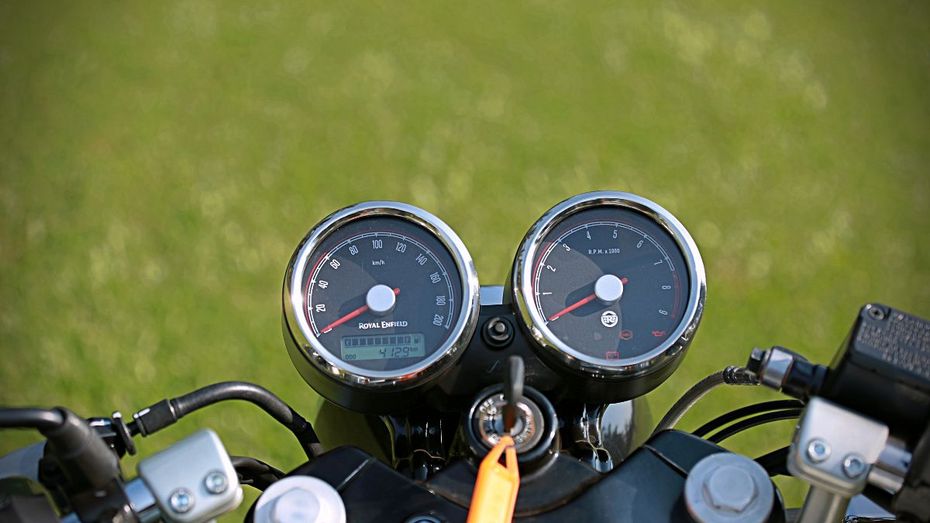
The instrument that measures the RPM is called the tachometer, one of the gauges that comes alive as you fire up the engine.
Why Is RPM So Crucial?
To understand why RPM is so important, it is essential to understand the basics of an internal combustion engine (ICE). As combustion occurs, the expanding gases force the piston downward and force the crankshaft’s offset crankpin, converting the piston’s up-and-down motion into rotation. This stroke of the piston is called the combustion/power stroke. Attached to one end of the crankshaft is the flywheel, which stores energy from each power stroke and helps maintain momentum, allowing the crankshaft to complete a full, continuous turn and also pushing the piston back to its position. One power stroke rotates the crankshaft once in a two-stroke engine and twice in a four-stroke engine.
As the crankshaft spins faster, the engine completes more combustion cycles in a given time, which means more power strokes. This increase in the engine speed or RPM results in higher power output and more fuel consumption. So, it becomes clear that the RPM is directly connected to the power and torque delivery, fuel use, and mechanical stress of an engine.
What Is Powerband?
The relationship between RPM and engine performance lies at the heart of motorcycle dynamics. As RPM increases, the engine generally produces more power, but only up to a point. Why? Because every engine is designed and tuned to produce its most usable and effective power and torque within a particular RPM range, which is called the ‘powerband.’ Your motorcycle feels most lively, responsive, and efficient. Beyond this RPM, power output starts to fall, even though the engine is spinning faster.
Suppose a motorcycle is said to deliver its peak torque at 6,000 RPM and maximum power at 8,000 RPM, then its powerband will be between roughly 6,000 and 8,000 RPM. So, staying within this range during acceleration or overtaking will keep the bike in its most effective performance window. The motorcycle may still gain a little speed if the drop in power is small beyond 8,000 RPM and the gearing allows it, but acceleration will be weaker than it was within the powerband.
What Is Redline?
Redline is the maximum RPM at which an engine can be operated safely. Imagine what will happen if you are lifting 100 kilos with a string designed to lift only 60-70 kilos? It will deform and eventually break, right? Similarly, the engine components are also designed to withstand a certain amount of load/forces and overloading them can destroy them or even the entire engine assembly, in some cases. That’s why knowing your redline is even more important; several parts move at unimaginable speeds inside an engine, and any failure can be seriously dangerous. And that’s why many modern motorcycles are equipped with rev limiters that automatically prevent the engine from spinning past this point to protect internal components.
RPM And Power vs Torque Equation
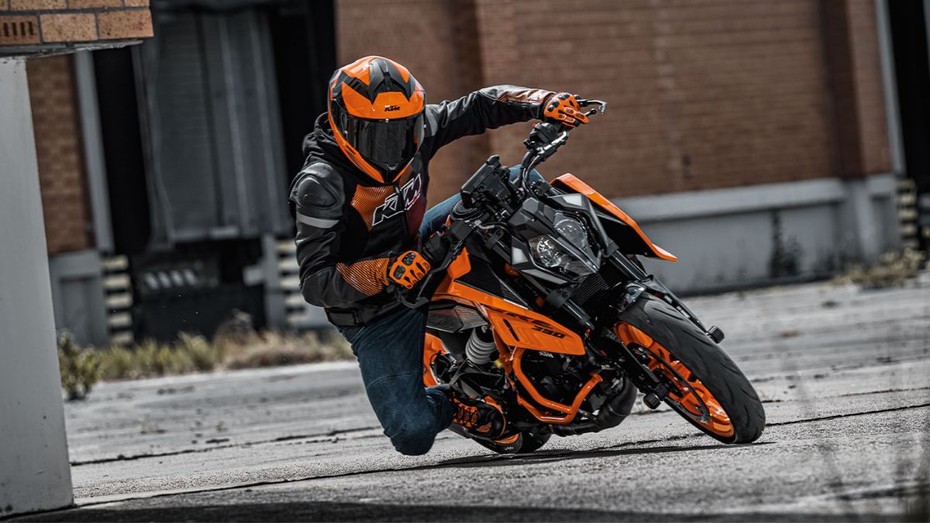
Have you seen different motorcycles with similar capacity engines having very different power bands? Some motorcycles deliver better peak torque, that too at a very early rev range, while some deliver better power but at a much higher rev range. And there are also many motorcycles bridging the gap between these kinds. This equation depends on the geometry of your engine, i.e. the bore and the stroke of your cylinders/pistons.
To understand this, we can take the example of an allen key. When you are tightening or loosening a screw, you usually put the shorter arm on the screw and apply force on the longer arm, right? Because the force you apply is multiplied by the length of that arm, and that is the torque you put on that screw. So, the longer the arm, the more torque you get at the centre of the screw, which makes the task much easier. Similarly, an engine with longer strokes generates more torque at the crankshaft, and that comes early too. But you can not operate such engines at too high RPM because their pistons have to travel a longer distance each revolution, which leads to very high piston speeds and increased mechanical stress as engine speed rises.

On the other hand, if you need more power than torque, you need higher repetition of combustion strokes. And for that, the engine needs to be designed to operate at higher RPM, and that’s only possible with shorter strokes.
Engines Designed for Different RPM Ranges
Long-Stroke (Low RPM) Engines: As mentioned above, long-stroke engines are designed to operate at relatively lower RPM ranges and are focused on better, early torque delivery. These kinds of engines are best for relaxed riding and offer excellent pulling for heavy motorcycles, such as cruisers and tourers. A clear and well-known example of a long-stroke motorcycle engine is the Royal Enfield Classic 350 with a bore of 72.0mm and a stroke of 85.8mm. It delivers about 20PS of power at 6,100 RPM and a peak torque of 27Nm at just 4,000 RPM.
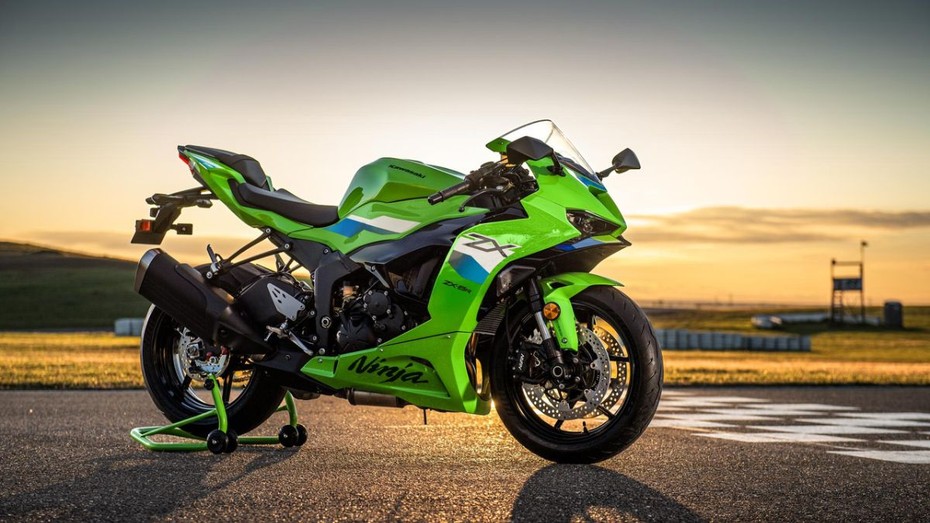
Short-Stroke (High RPM) Engines: These kinds of engines are built to rev high, and their RPM build pretty quickly. With a shorter stroke, these engines are capable of operating in a very high RPM range to fulfil higher power output requirements in high-end sports bikes. For example, the Kawasaki Ninja ZX-10R has a bore of 76mm and a stroke of 55mm, and it delivers over 200PS of power at a whooping 13,200 RPM.
Square (Mid RPM) Engines: These kinds of engines are usually designed with almost similar bore and stroke, which is why they are called square engines. Their powerband usually lies between that of the low and high RPM engines, offering an optimum balance of power, torque and fuel efficiency. That’s why this is the most widely used configuration for commuters, street bikes and even touring motorcycles. The Hero Honda Splendor is one of the most widely known examples, with its engine having an almost identical bore and stroke of about 50mm. It delivers 8PS of power at 8,000 RPM and a peak torque of 8Nm at 6,000 RPM.
We hope these insights will help you understand the RPM of your motorcycle’s engine too, so you can communicate with it in a better way the next time you ride.
2 out of 2 found this helpful