

How to Change Motorcycle Or Scooter Engine Oil - The Complete Beginner’s Guide


A step-by-step guide to help you replace the engine oil
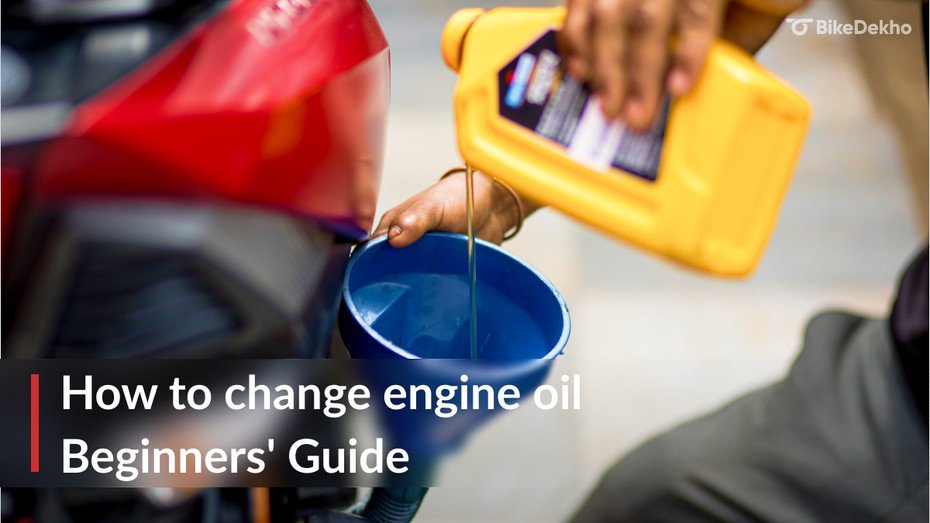
As much as we love and pamper our precious machines, there’s one aspect of the motorcycle-owning experience that many owners tend to overlook: timely maintenance. It doesn’t have to be that way though: you don’t have to have an advanced mechanical engineering degree to give your bike or scooter some TLC instead of giving it off to a professional.
Take changing your motorcycle oil for instance. It is one of the simplest things you can do that pays the biggest long term dividends. Let us show you why it matters, how often to do it, when to follow the manual and when it is ok to deviate, so you can do it yourself and save some money.
What engine oil actually does
Engine oil lubricates moving parts. It helps carry heat away from piston rings and bearings, it keeps contaminants suspended so they do not score metal, and it creates a thin seal that helps compression. Over time oil picks up heat, acid and combustion byproducts. Old oil becomes thin, less protective, and less able to cool and clean.
How frequently to change engine oil
Small commuter bikes in India often have service schedules calling for oil changes every 4,000km to 6,000km or every 3 to 6 months. Some manufacturers specify longer drains if a specific factory oil is used. Heavy commuting in slow traffic, short hops where the engine never reaches full temperature, dusty roads, frequent high rpm riding, or aggressive riding all require you to change oil more frequently. That said, modern full synthetic oils and steady highway use can stretch intervals.
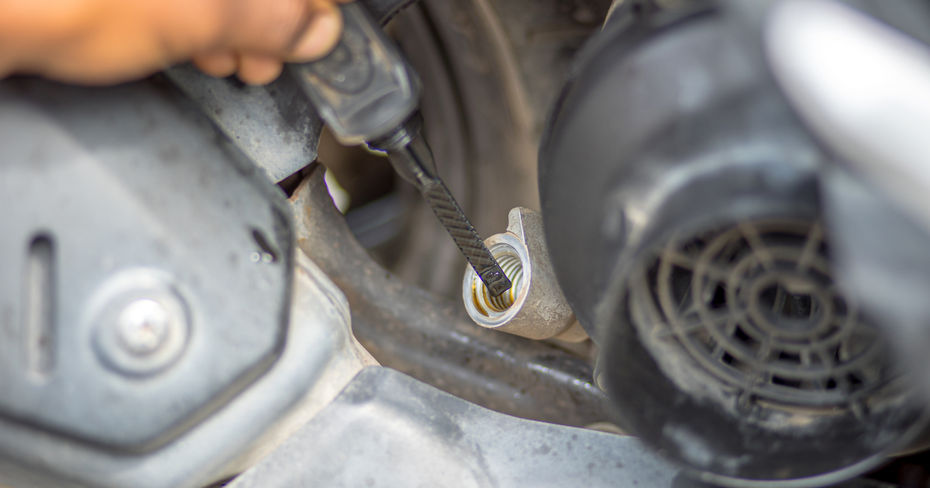
Types of motorcycle oil in India and how they differ
There are three common families. Mineral oils are refined conventional oils. They are cheapest and work fine for older or low stress engines, but they break down faster. Semi-synthetic oils are blends that give some of the benefits of synthetic performance without the full price. Full synthetic oils are engineered in the lab for better thermal stability, flow at low temperatures, and longer life.
Viscosity is the other crucial piece. Viscosity codes such as 10W-40 appear everywhere. The first number with the W explains the viscosity when the oil is cold cold, at start up. The second number describes viscosity at operating temperature, when the engine is hot. Pick the viscosity your manual asks for, or a close match appropriate for your climate. For example, in hot tropical cities, a 10W-40 or 20W-50 family is common for many air-cooled engines.
Finally, motorcycle specific oil specifications matter because many motorcycle engines share oil with a wet clutch and gearbox. The Japanese Automotive Standards Organization test T 903 classifies oils into MA, MA1, MA2 and MB by friction and clutch compatibility.
How to pick the right oil.
Start with the owner manual. It lists recommended viscosity and often a required specification such as JASO MA, or an API rating. If the manual calls for a specific factory oil that promises longer intervals, be aware that substitute oils of equivalent grade are usually acceptable, but the maker may reserve long drain claims for their own product. If you want to use a higher quality oil, pick one that meets or exceeds the viscosity and JASO or API specs in the manual, and do not use an oil aimed at cars only.
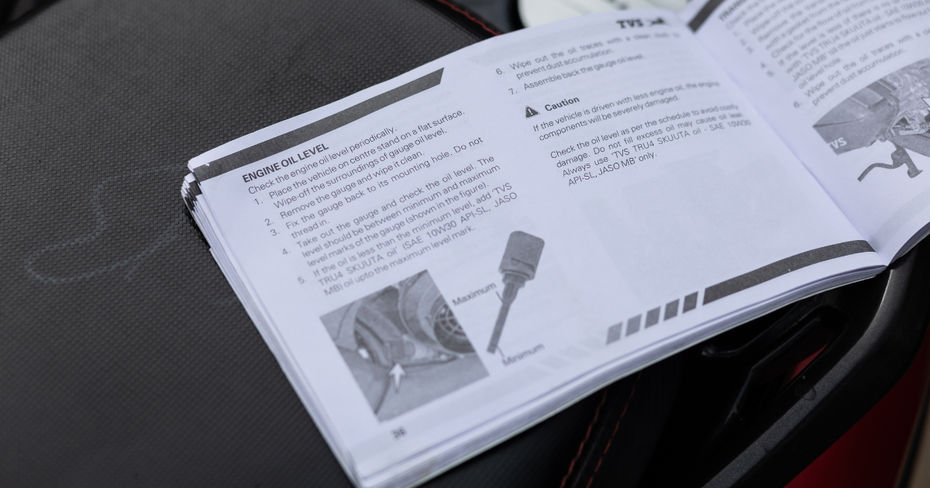
A simple step by step to change your motorcycle engine oil
Step 1. Warm the engine as warm oil drains more completely. Run it at idle long enough for the oil to warm up.
Step 2. Secure the bike on its centre stand or paddock stand. Place a drain pan under the engine.
Step 3. Remove the drain plug and loosen the oil filler plug, and let the oil run into the pan. Allow time for the bulk to drain, then replace the plug and tighten.
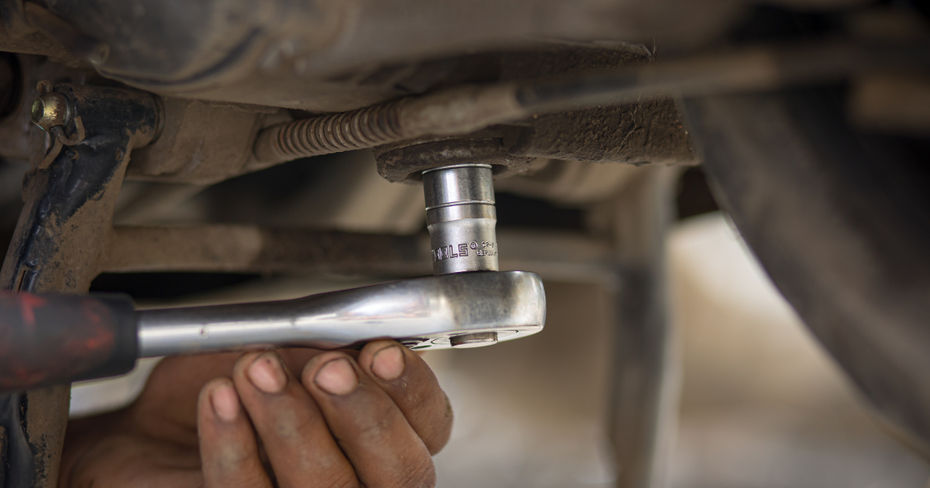
Step 4. If your bike has a replaceable oil filter, remove it. Coat the new filter seal with a thin film of fresh oil, fit it hand tight and then follow the recommended final tightening.
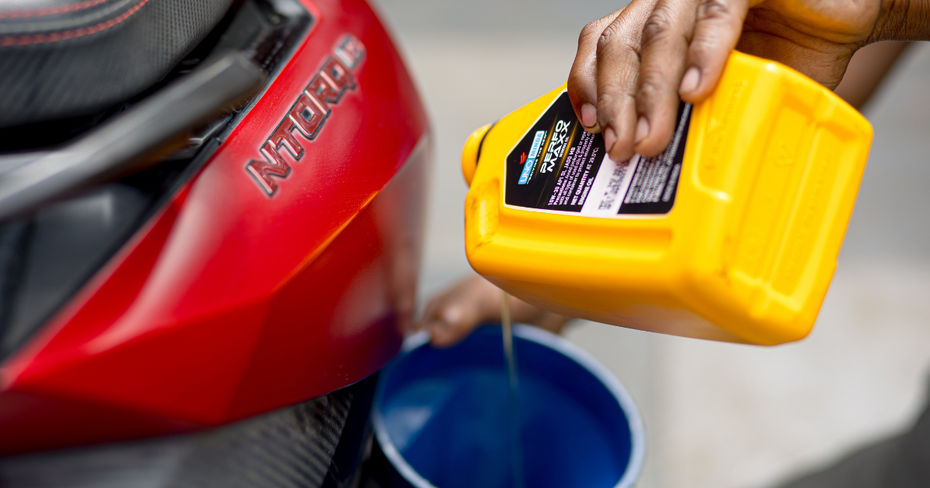
Step 5. Refill with the correct volume and viscosity indicated in the manual. Use a clean funnel and measure the oil in a measuring beaker to avoid over filling.
Step 6. Start the engine for a minute, check the oil pressure or warning light if applicable, then turn off and recheck the level after a minute on the dipstick or level window.
Step 7. Clean up. Wipe spills, dispose of used oil responsibly and do not dump it down drains.
Step 8. Record the date and odometer reading, and mark the next service interval on your phone.
Final note: Follow the manual, and enjoy the work
Follow the owner manual for specs and capacity. Use a motorcycle specific oil with the correct viscosity and JASO class, and you will be protecting clutch feel and gearbox life as well as the engine.
So there you have it; changing your motorcycle oil is as easy as they come. By doing it yourself, not only do you save some valuable time and money, you also get to know your ride more intimately and in the process develop a deeper bond and understanding of what’s happening inside those polished innards as you munch down the miles onto your next destination.
3 out of 3 found this helpful