

Long Stroke vs Short Stroke Engines Explained: Motorcycle Basics


Under the skin of motorcycle engines lies a simple geometry that decides how your bike feels to ride, the bore and the stroke.
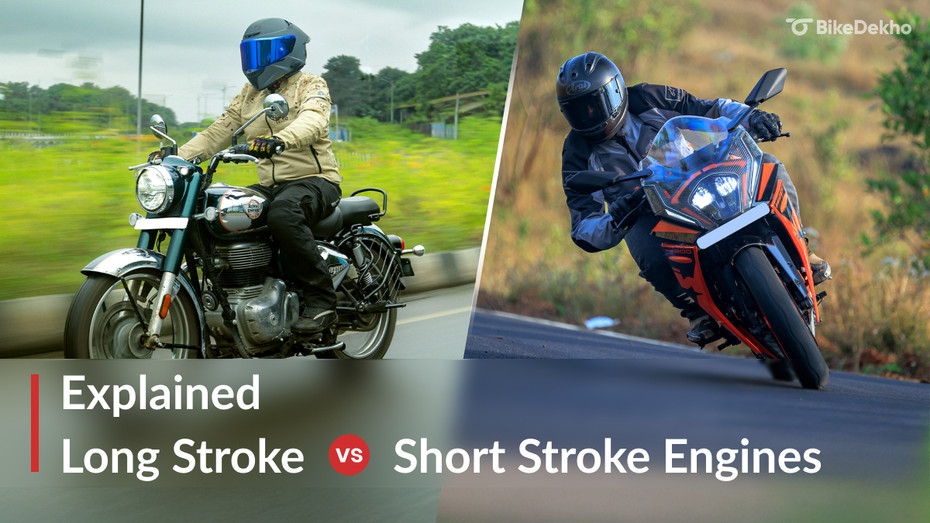
Every biker, at some point, has met the words “long stroke” and “short stroke” while reading spec sheets or bantering over chai. These terms sound technical, but they are actually about something quite simple: the shape of the engine’s internal heart. And the difference between the two explains why one motorcycle feels like an easy-going torque wave while another screams to the redline with manic energy.
What are Bore and Stroke, really?
Inside every engine, the piston moves up and down in a tight-fitting cylinder. The bore is the diameter of this cylinder – how wide it is. Stroke is the distance the piston travels vertically in the cylinder.. It’s pure geometry. Multiply those together with the number of cylinders and you get the engine’s total capacity, which we know as cubic centimetres or cc.
When the stroke is longer than the bore, you get what’s called a long stroke engine. When the stroke is shorter than the bore,, it’s a short stroke engine. Simple enough, but that subtle difference in proportion dictates the entire personality of a motorcycle.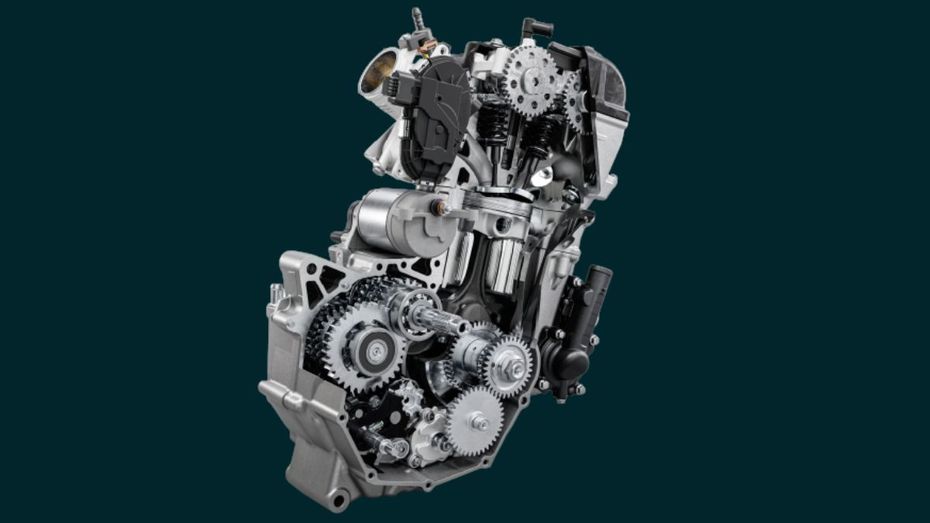
The Long Stroke Character: Lazy Muscles and Instant Torque
If you’ve ever ridden something like a Royal Enfield Classic 350, you’ve felt the long stroke charm. These engines have pistons that travel a long way up and down for every revolution of the crankshaft, which naturally limits how many times per second they can complete this journey. The result is lower maximum revs and a strong surge of torque available at low to mid-range speeds.
Because the piston moves further, it takes longer to complete each cycle, but it also pushes harder. The longer stroke gives the crank more leverage, just like using a longer wrench to loosen a tight bolt. More leverage means more twisting force at the crank, and that becomes torque at the rear wheel. This is why long stroke engines feel strong even when ridden lazily. They make their power low down, letting you roll through traffic without a lot of gear shifts.
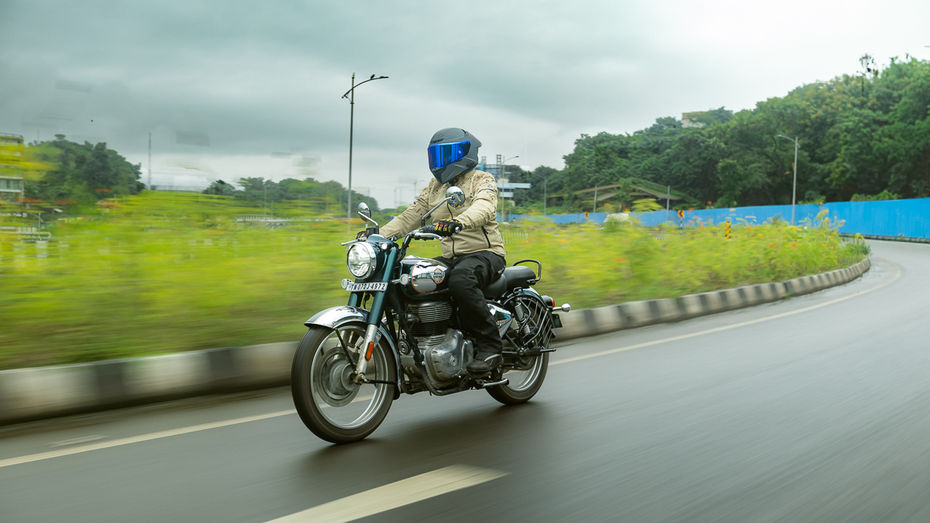
The trade-off is that they dislike being revved. Their internal parts move longer distances per revolution, which increases piston speed dramatically as revs climb. High piston speed creates stress and heat, forcing the redline to stay low. That’s why your such engines feel happiest between 2,000 and 5,000 rpm rather than screaming at 10,000.
What they lack in top-end fireworks, they make up for in feel and tractability. A long stroke engine feels like it’s got muscle in reserve, pushing you ahead with a confident thump rather than a high-pitched whine.
The Short Stroke Engine: The Thrill of the Rev
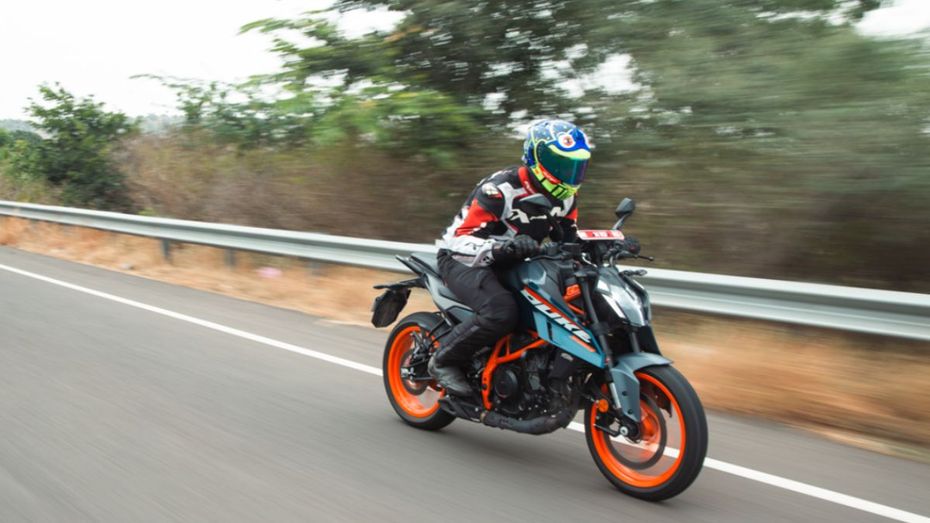
Now step onto a sharp, high-revving motorcycle like a Yamaha R15, KTM Duke 200 or the likes. These are short stroke engines, compact and over-square (meaning the bore is larger than the stroke). Here, the piston has a shorter distance to travel, which allows it to zip up and down faster and handle high revs safely.
Because the stroke is short, you lose some mechanical leverage but gain the ability to spin quicker. These engines make their power at much higher rpm, often double what a long stroke motor can safely manage. The result is thrilling acceleration once you keep the revs up. The torque may feel weak at low speeds, but as the tachometer soars past the midway mark, the engine wakes up into a frenzy of noise and motion.
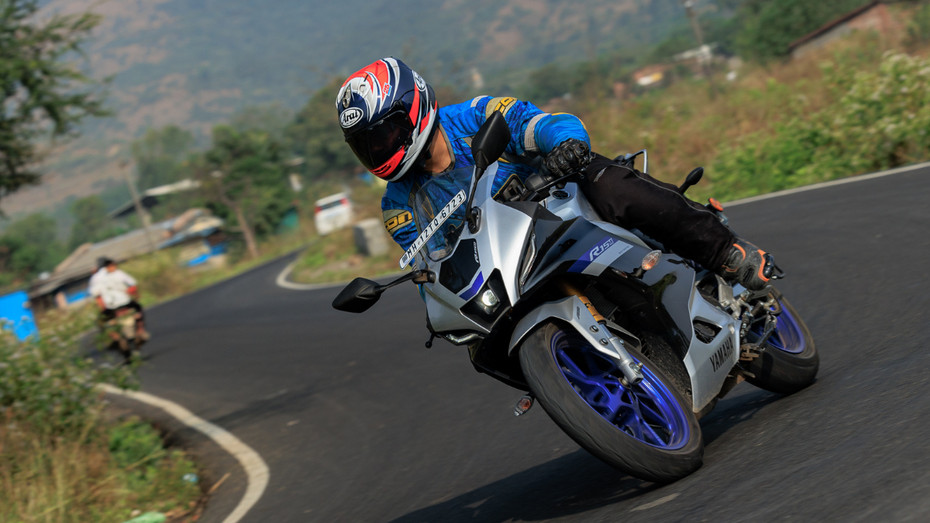
But yes, that comes with a compromise too. They’re less pleasant if you ride slowly through city traffic or haul a pillion uphill in top gear. Without gear changes, a short stroke motorcycle can feel like it’s gasping until you give it the spin it craves.
Striking a Balance
Many modern motorcycles seek a compromise called a square engine, where bore and stroke are roughly equal. This middle ground offers decent torque at lower revs along with the ability to rev respectably high. Bikes like the Honda CB350 or Suzuki Gixxer 250 exemplify how balance can work better for mixed-use riders who want both usability and punch.
Ultimately, engine design is about intent. Engineers don’t pick long or short strokes arbitrarily; they tailor that geometry to the purpose of the motorcycle.
The Verdict of the Road
When you next swing a leg over a motorcycle, notice not just how fast it goes, but how it goes fast. The calm confidence of a long stroke engine or the manic rush of a short stroke one says as much about engineering as it does about philosophy. One builds momentum like a freight train; the other builds speed like a jet. Both have their charm, and both remind us that under the metal and oil, motorcycling is still an emotional affair built on mechanical poetry.
2 out of 2 found this helpful